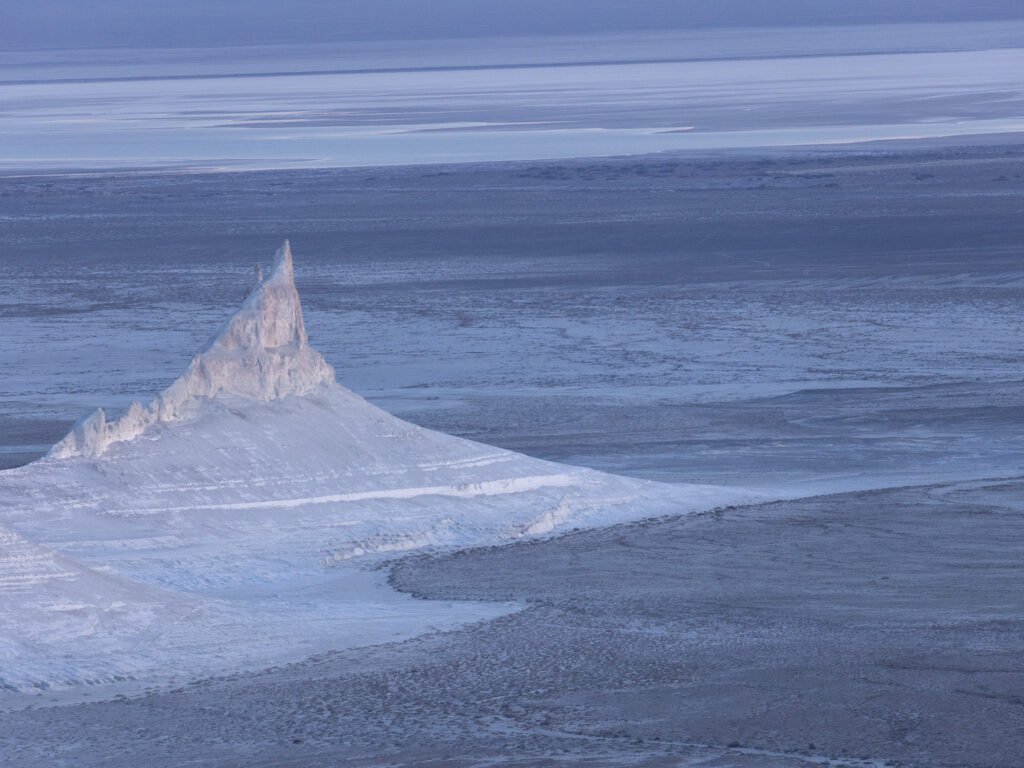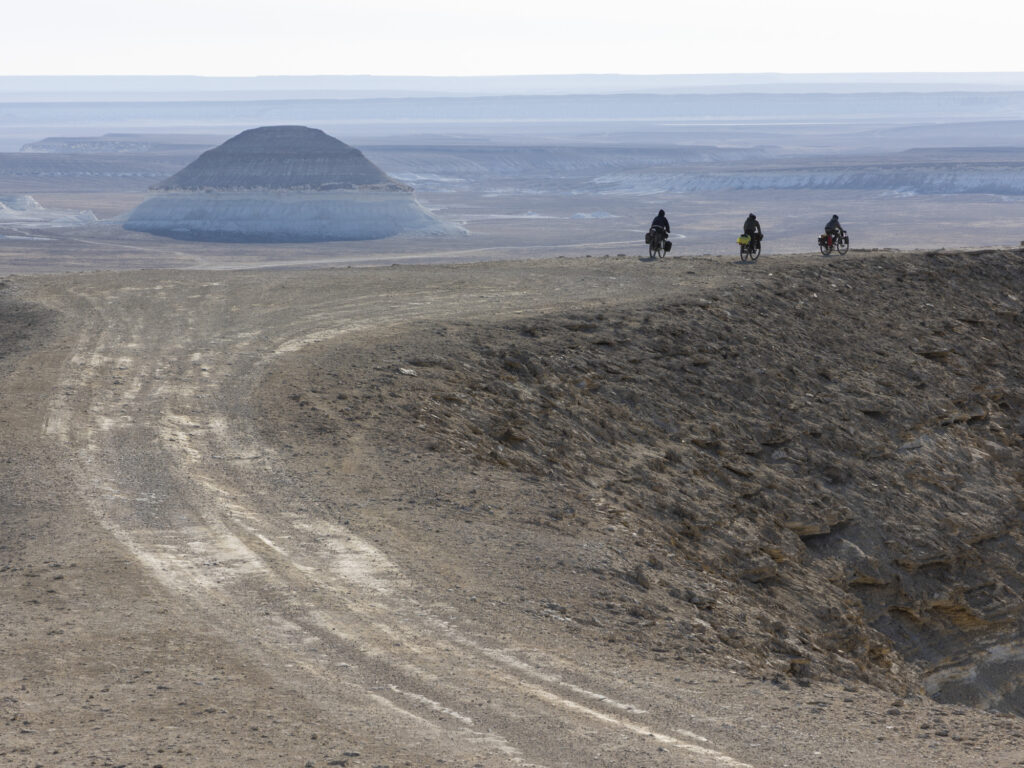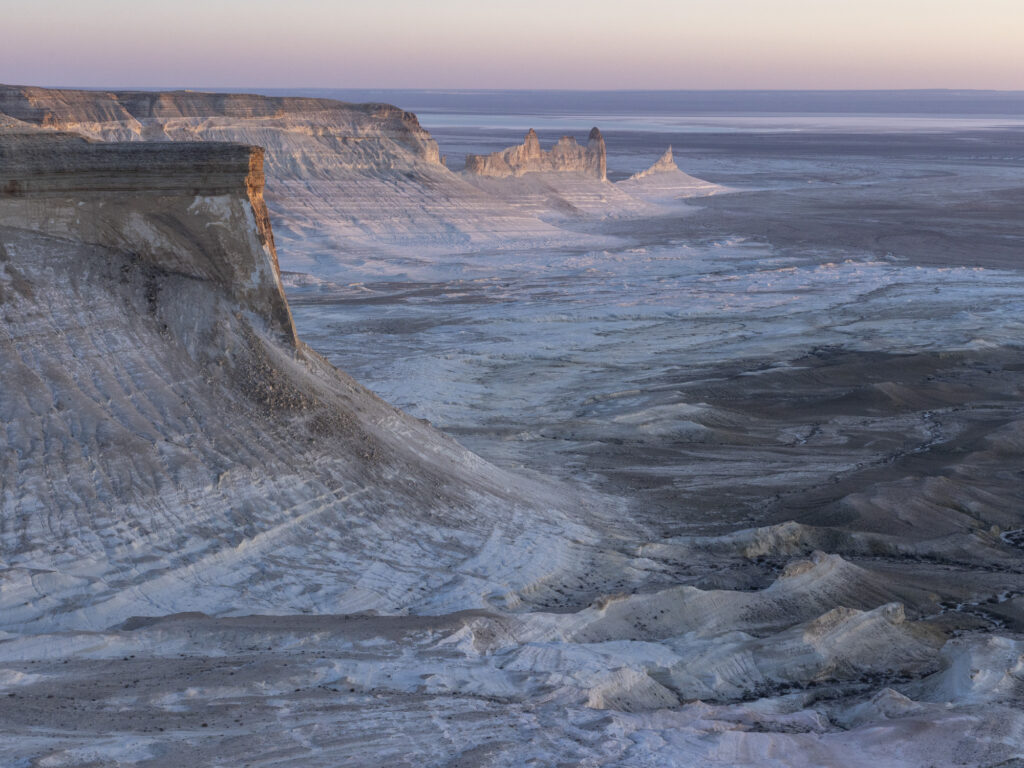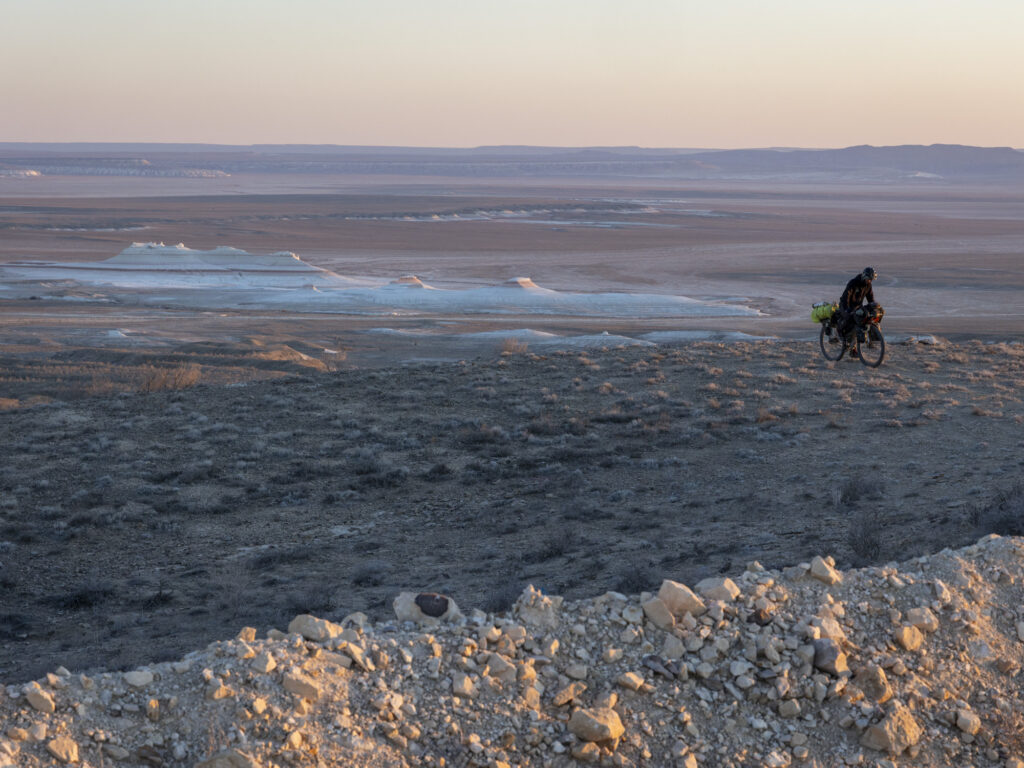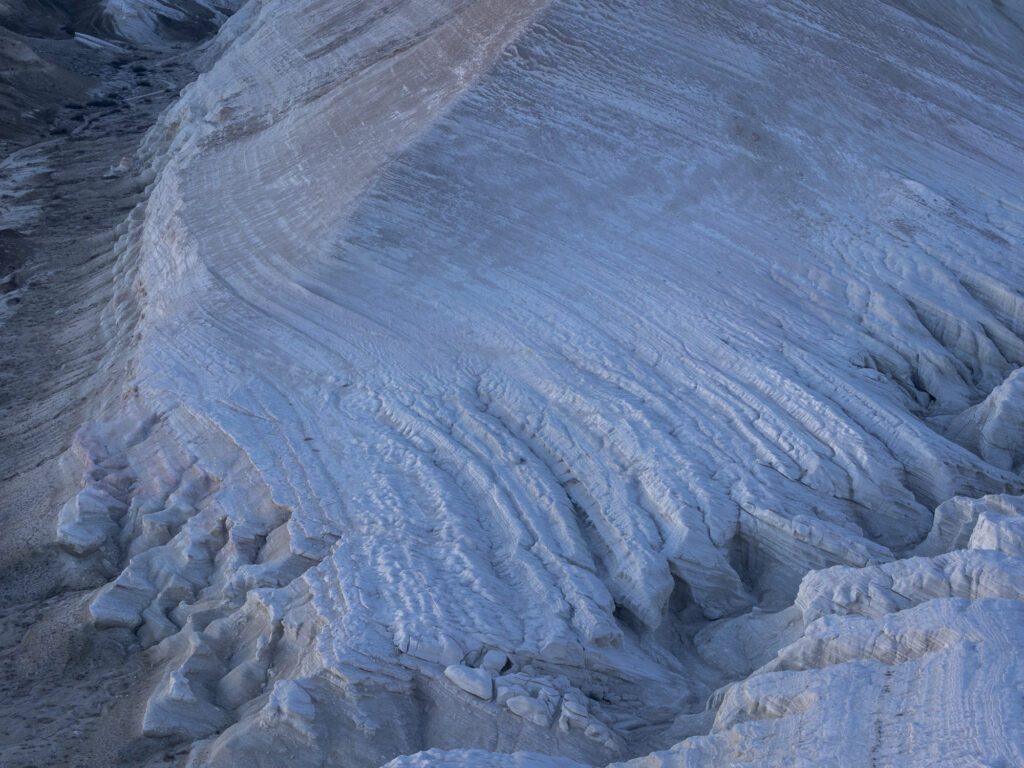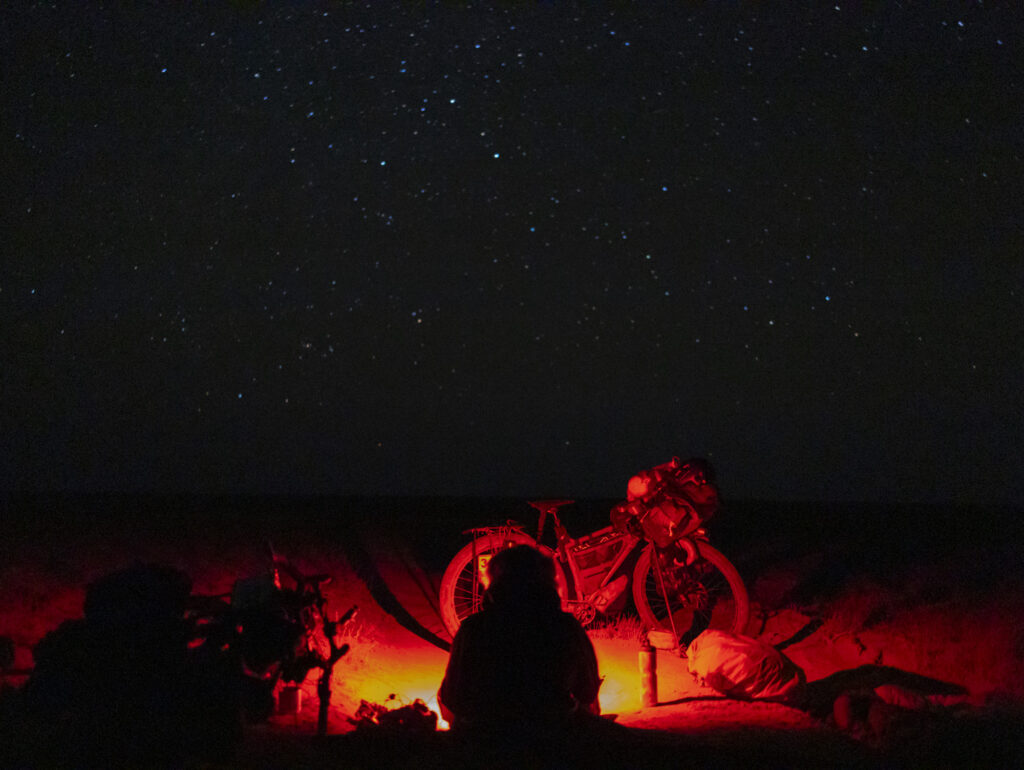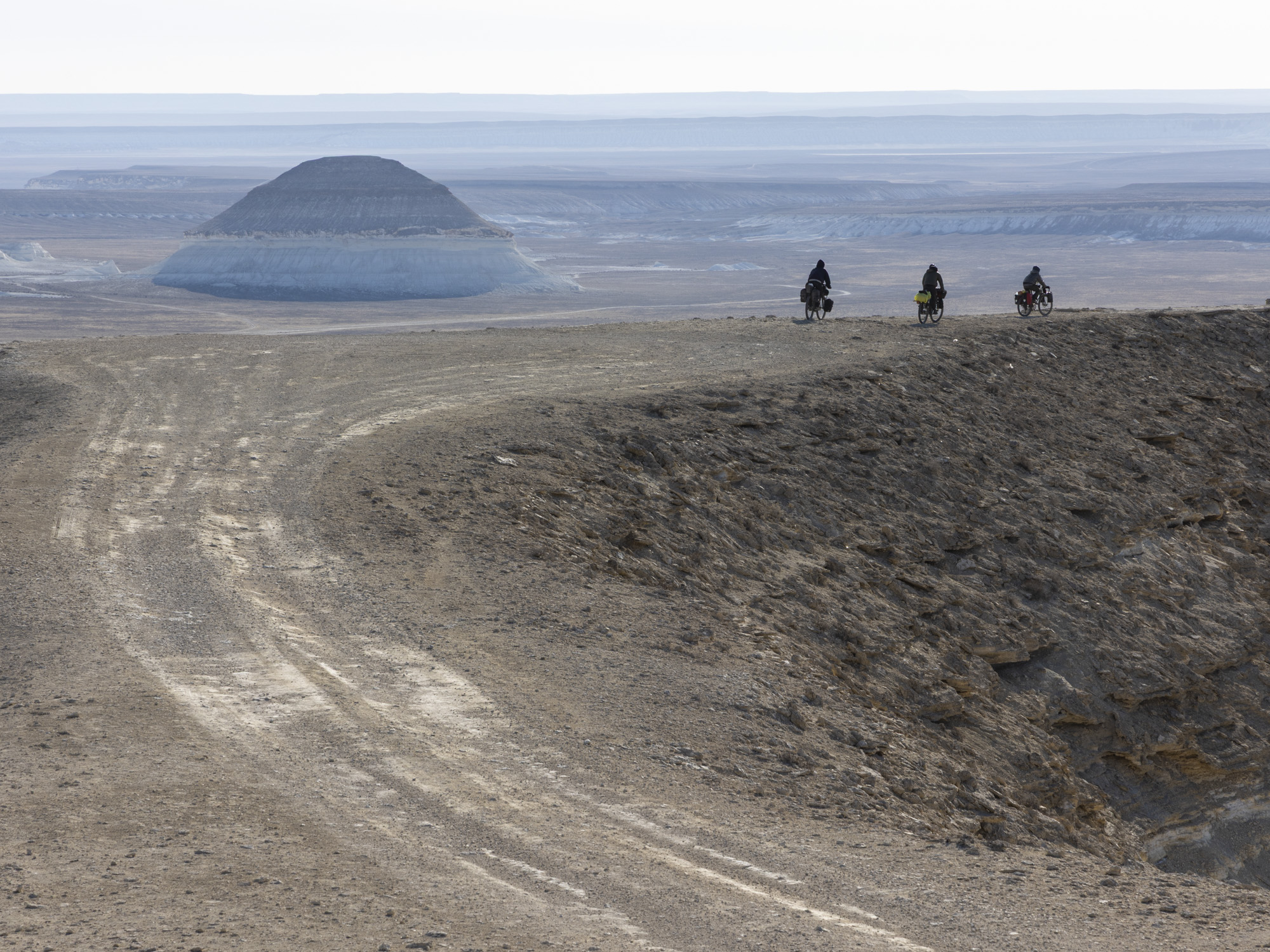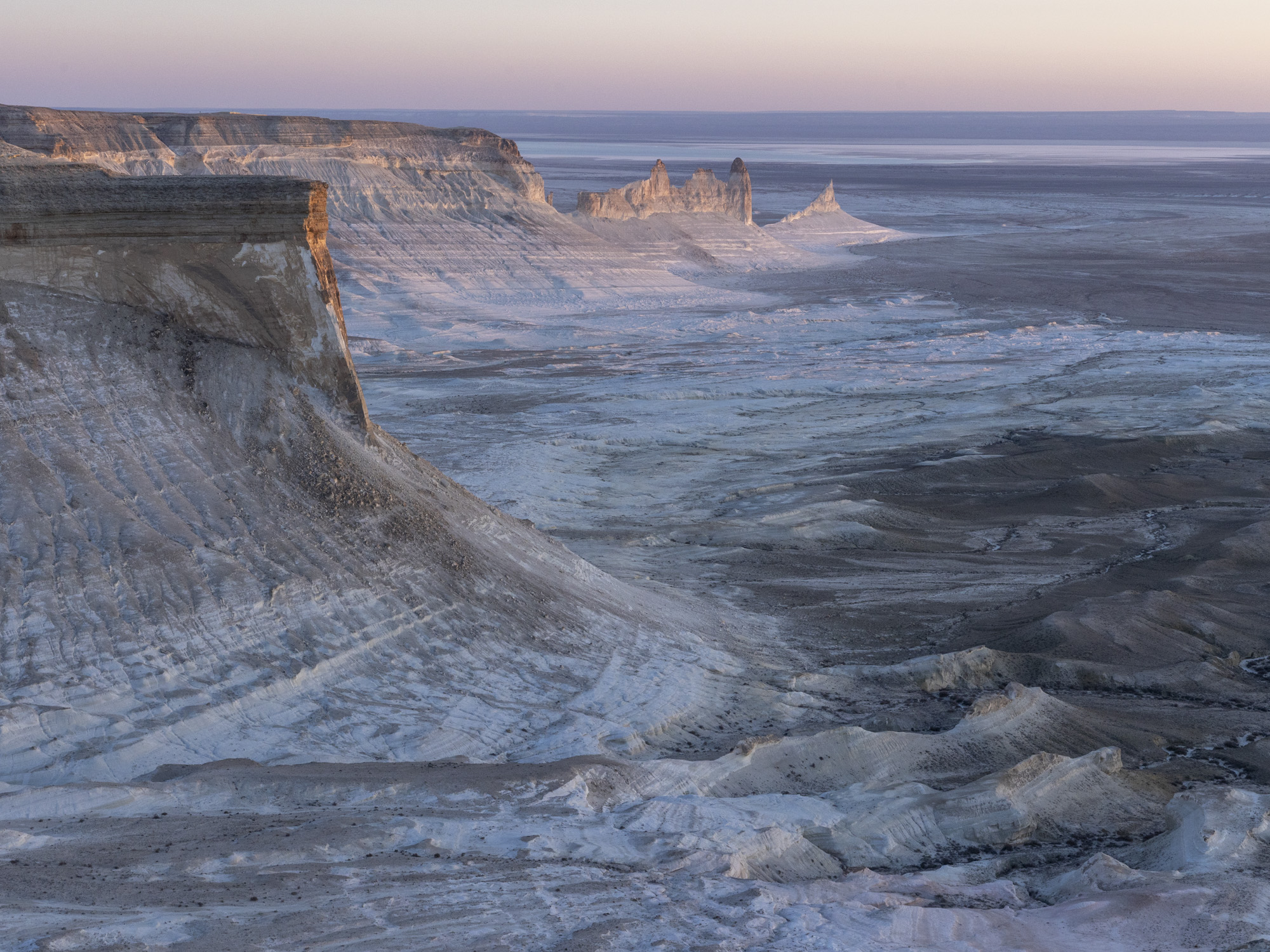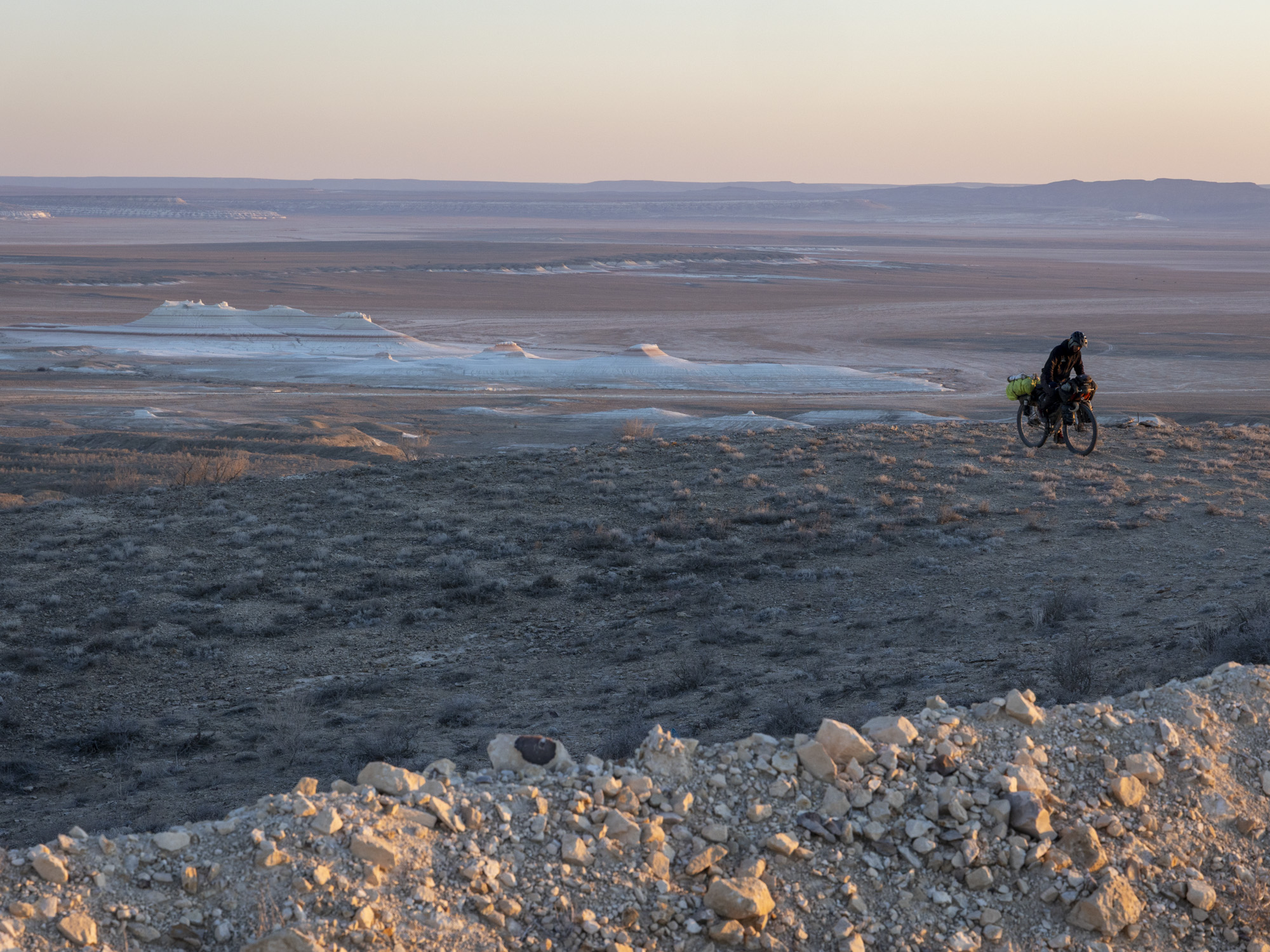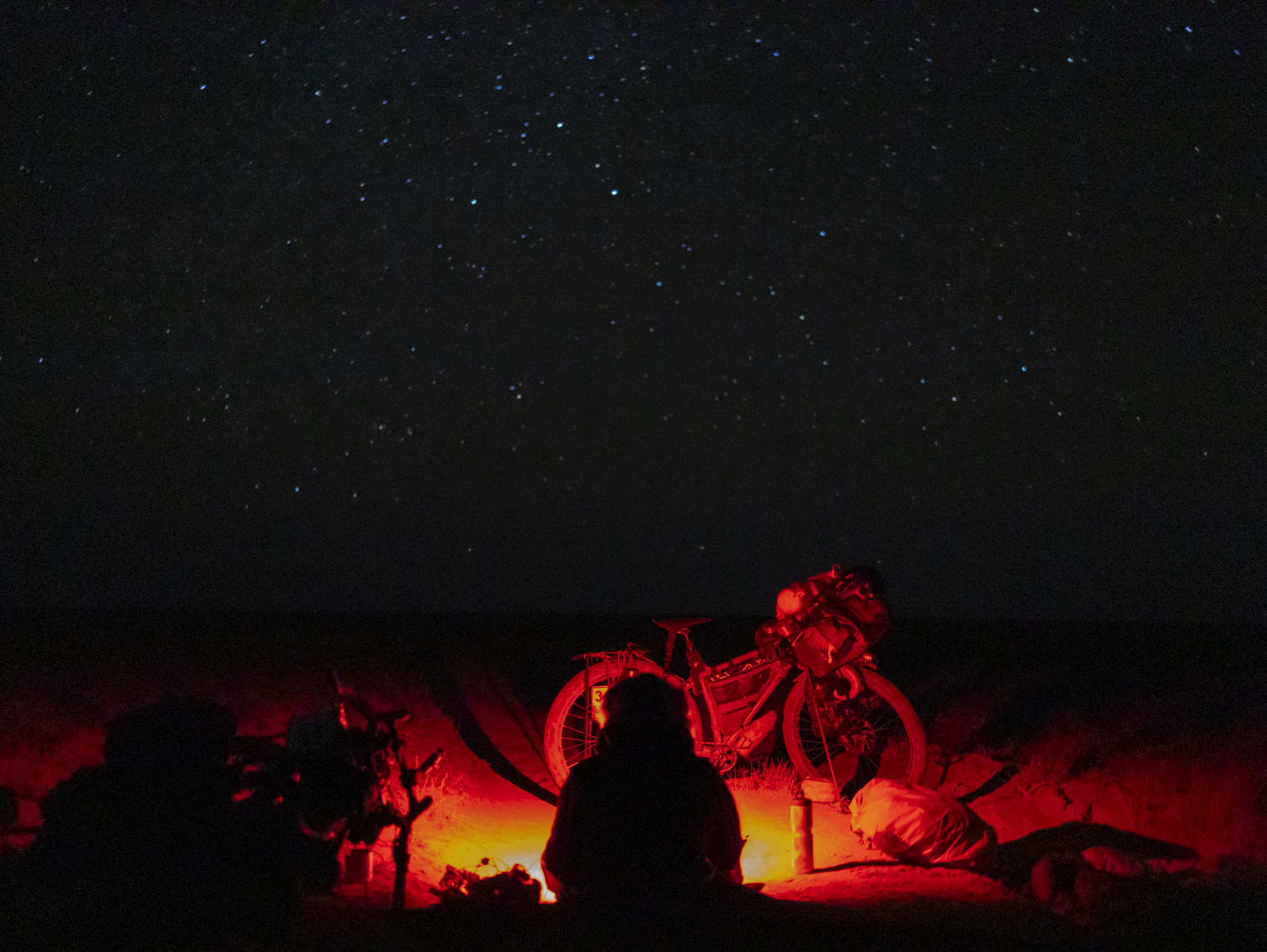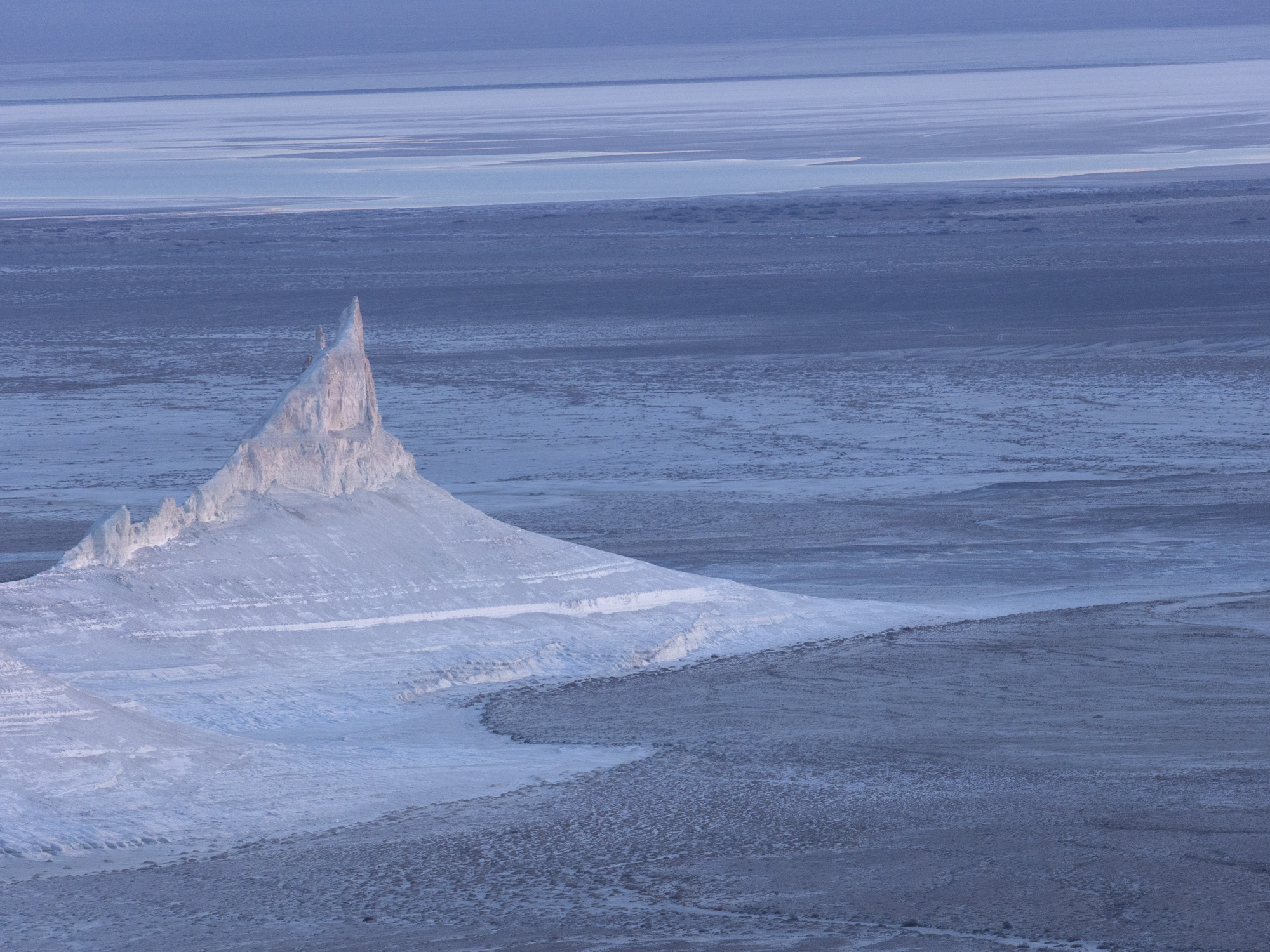
4:30 p.m. It is the fourth day of travel across the desert since we left the last inhabited settlement. On the dirt road, along the final stretch — which is also the longest — all four of us stop to catch our breath. Our cheeks are chapped by the sun and the biting cold. Our knees whisper weary complaints. Around us, for more than 24 hours, the landscape has been identical: flat, dry, endless.
For a moment we remain silent, until Liam speaks up and gives voice to what everyone is thinking:
“This road is brutal. We’re not even halfway. I’ve got enough water to last until tomorrow afternoon. After that, we’ll have to figure something out.”
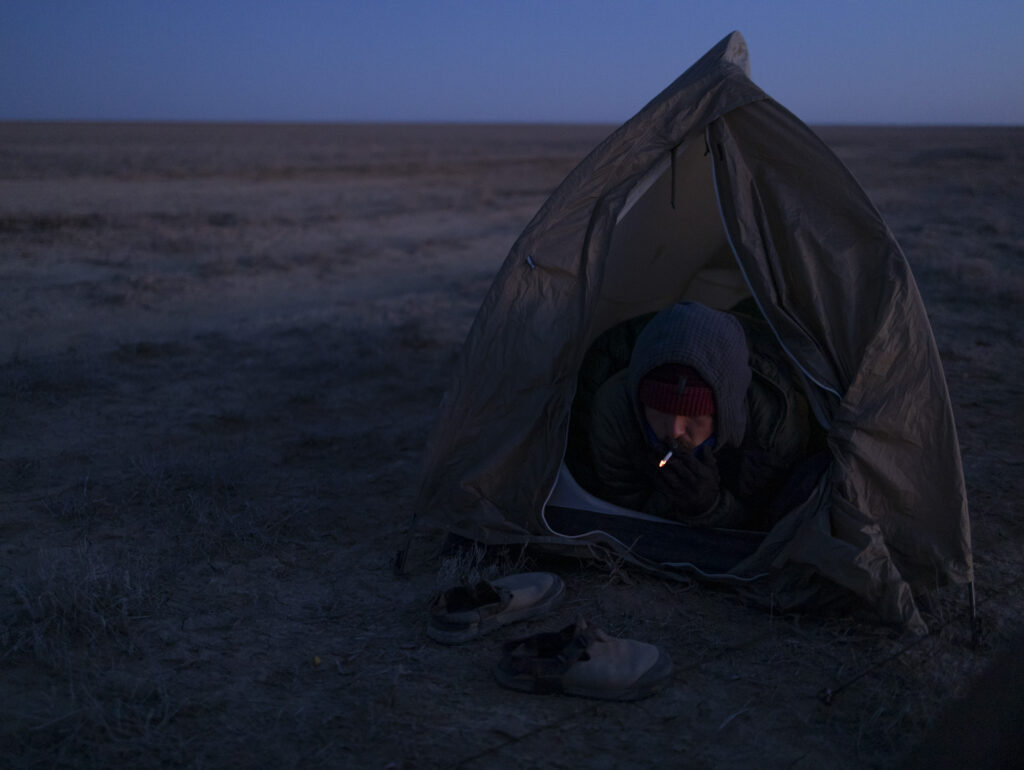
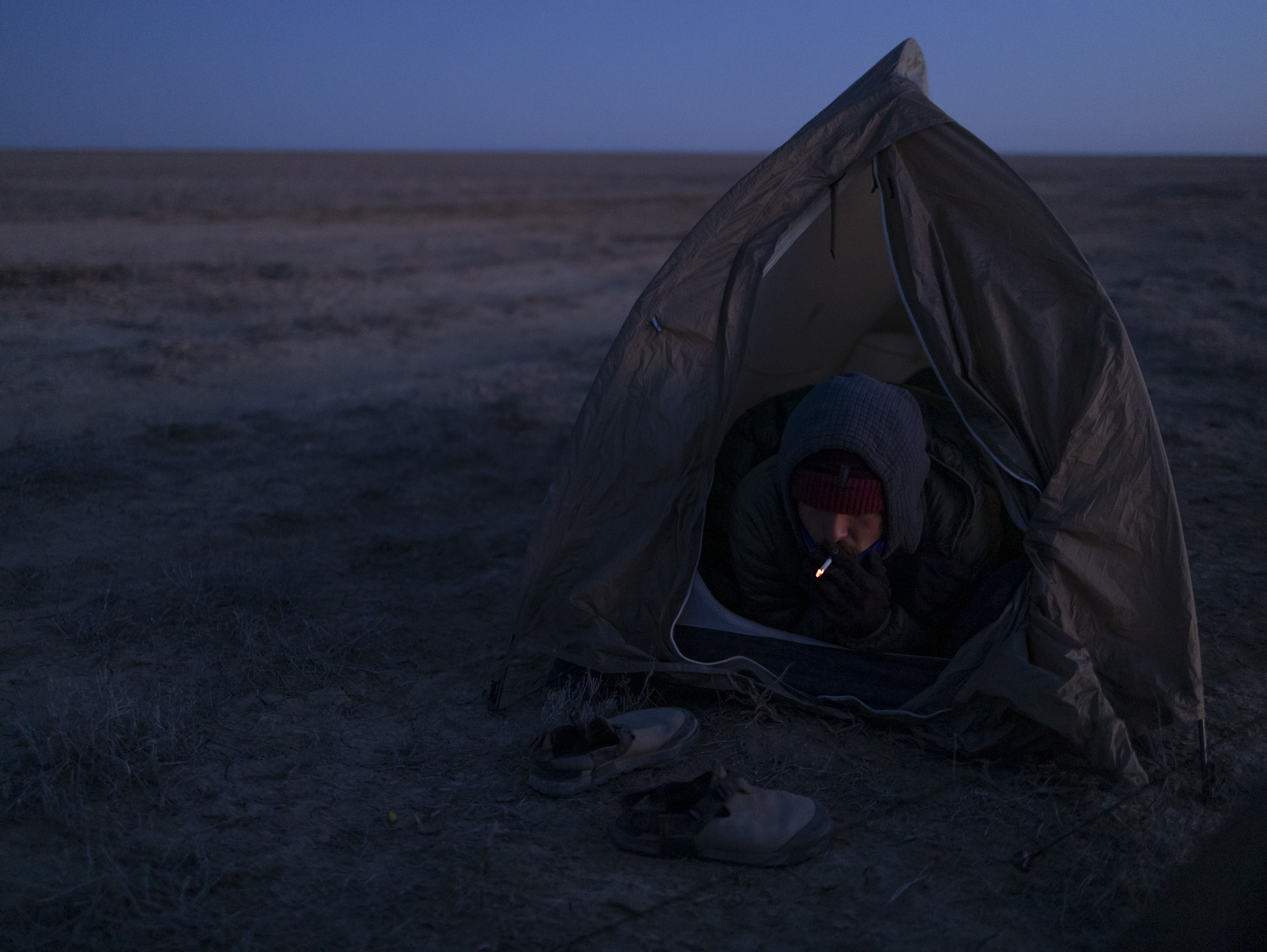
The day before, we had resupplied at the Beket Ata mosque, an oasis in the middle of the desert where we had let ourselves sink into the warmth of its carpets, before heading back out to face the wind. The temperature is rising: the -12°C of the first day are now a distant memory. Spring is slowly reclaiming its place even here, across the vast Kazakh steppes, although in the mornings frost still covers the tents.
We still have 50 km of dirt and potholes ahead, where our focus must be entirely devoted to trying not to wreck the bikes or crash again. After all, there isn’t much around to distract us. Beyond that, in “civilization,” another 96 kilometers of nothing, but on asphalt, with the wind blowing against us.
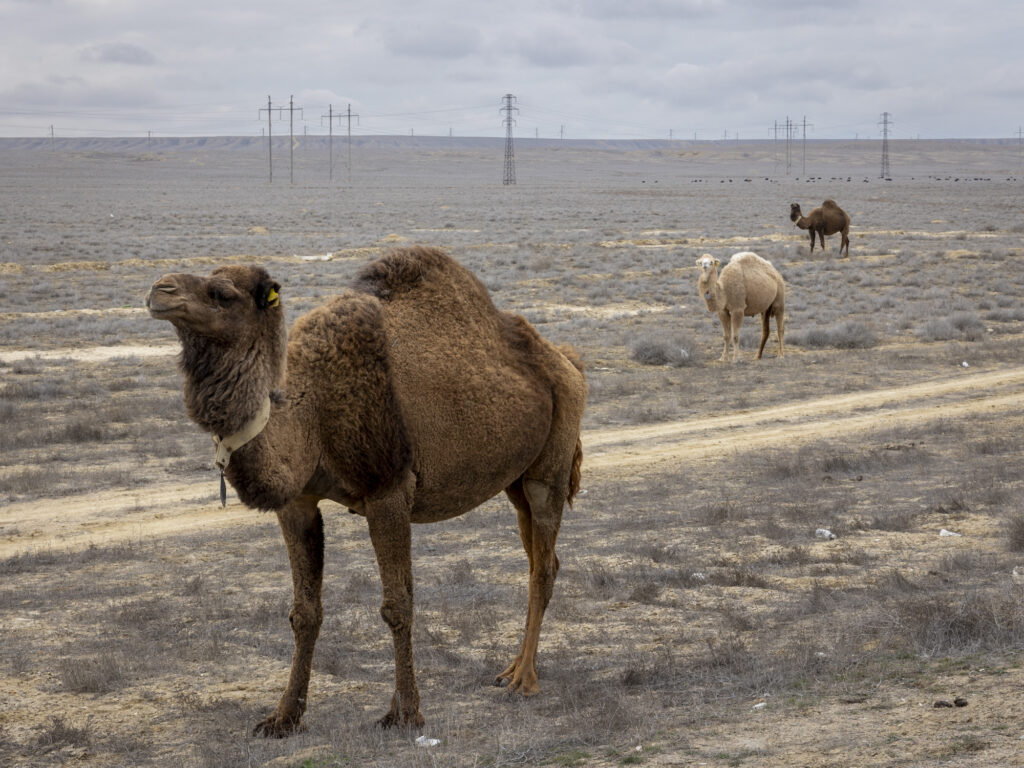
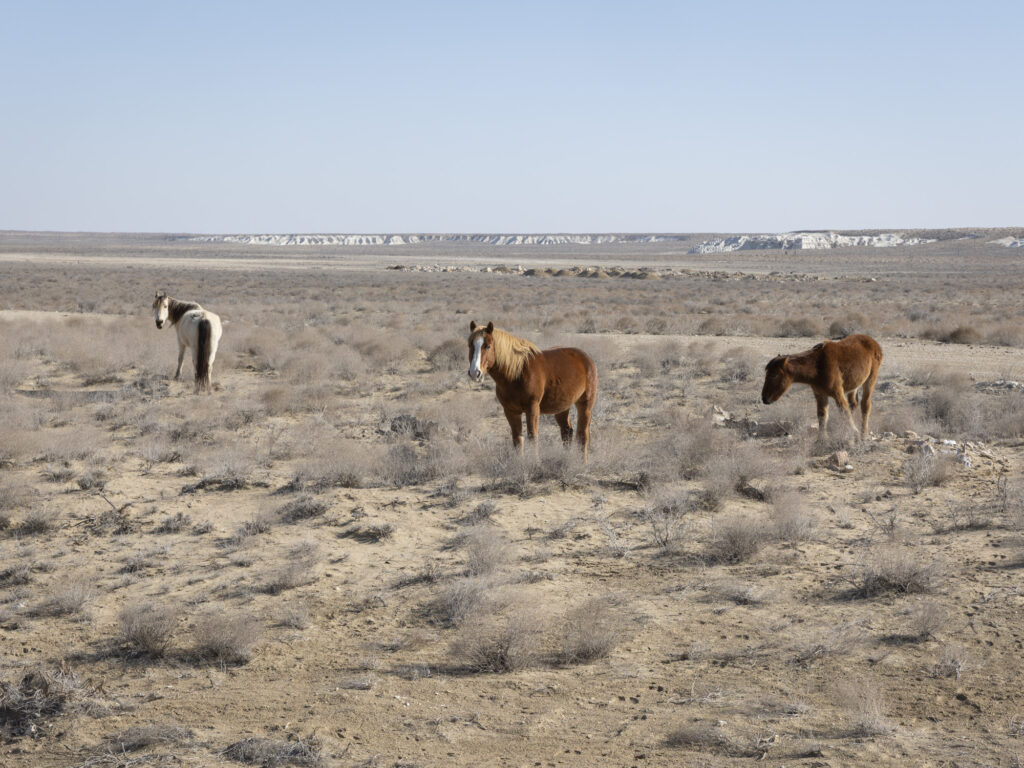
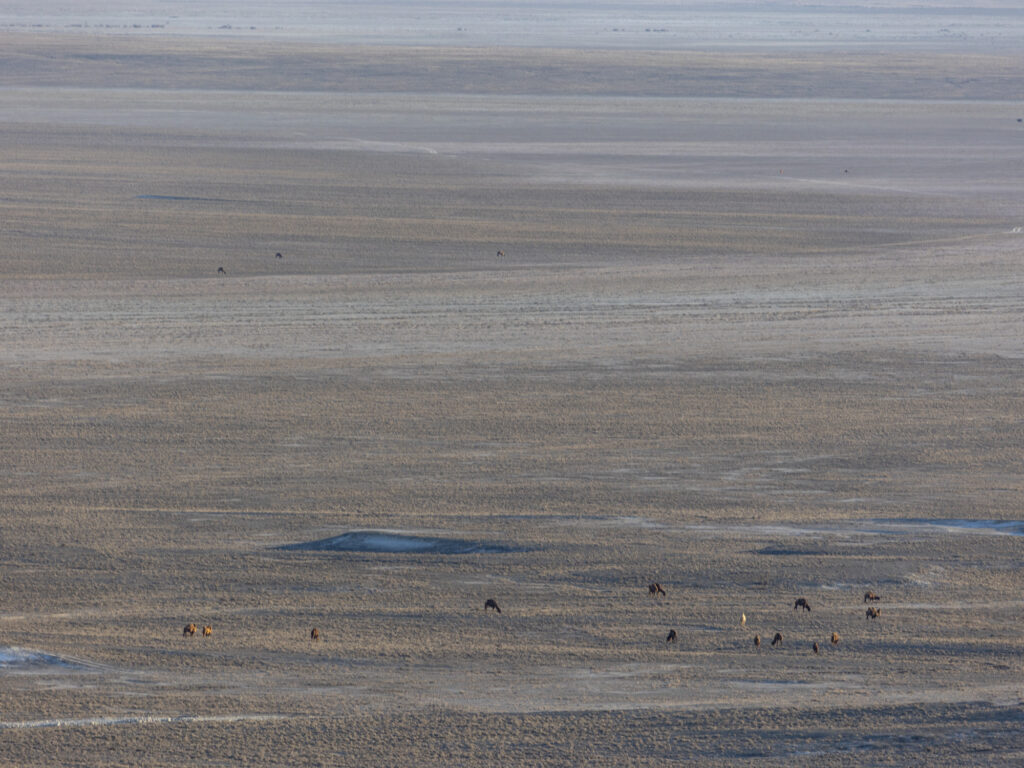
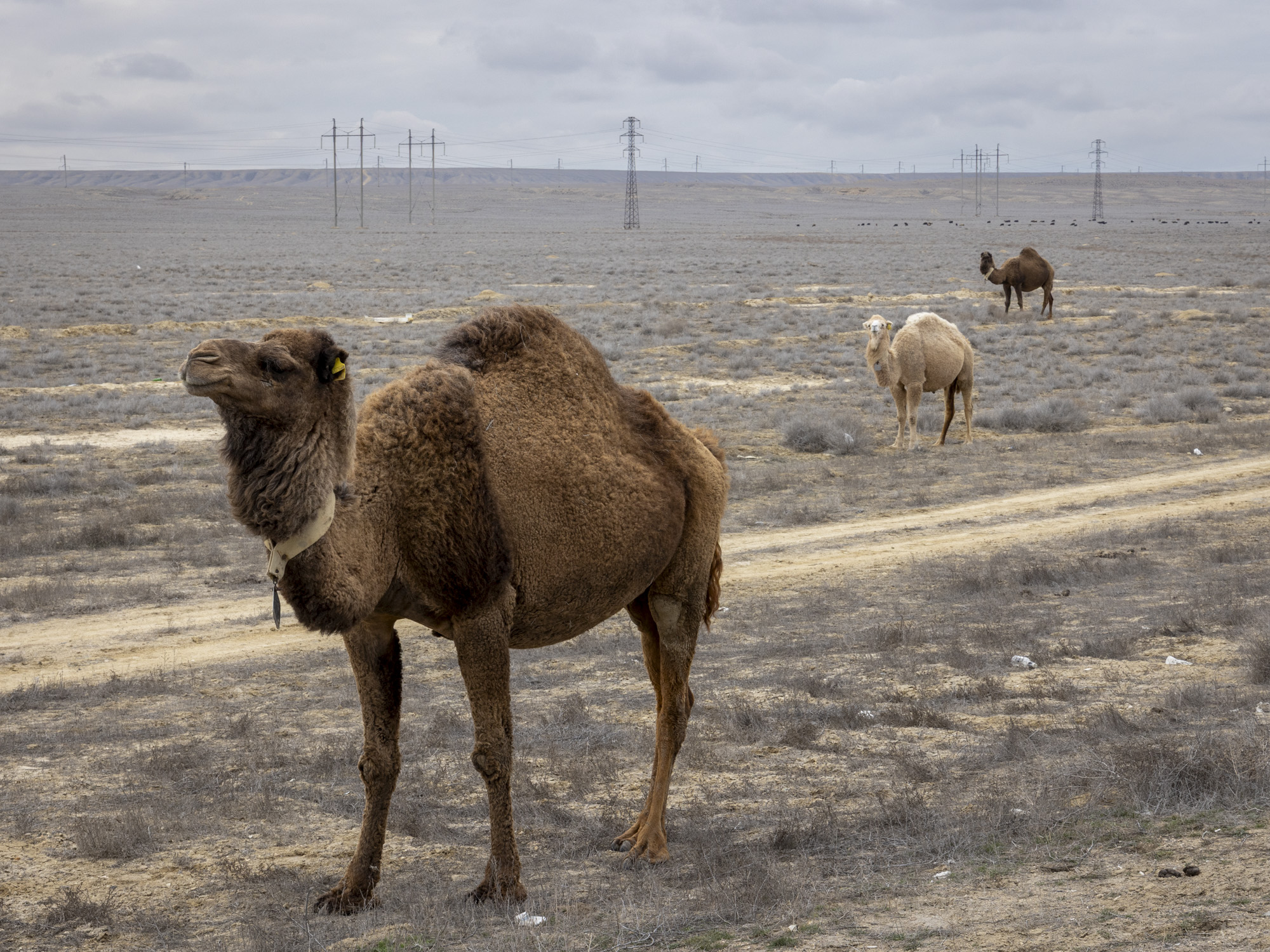
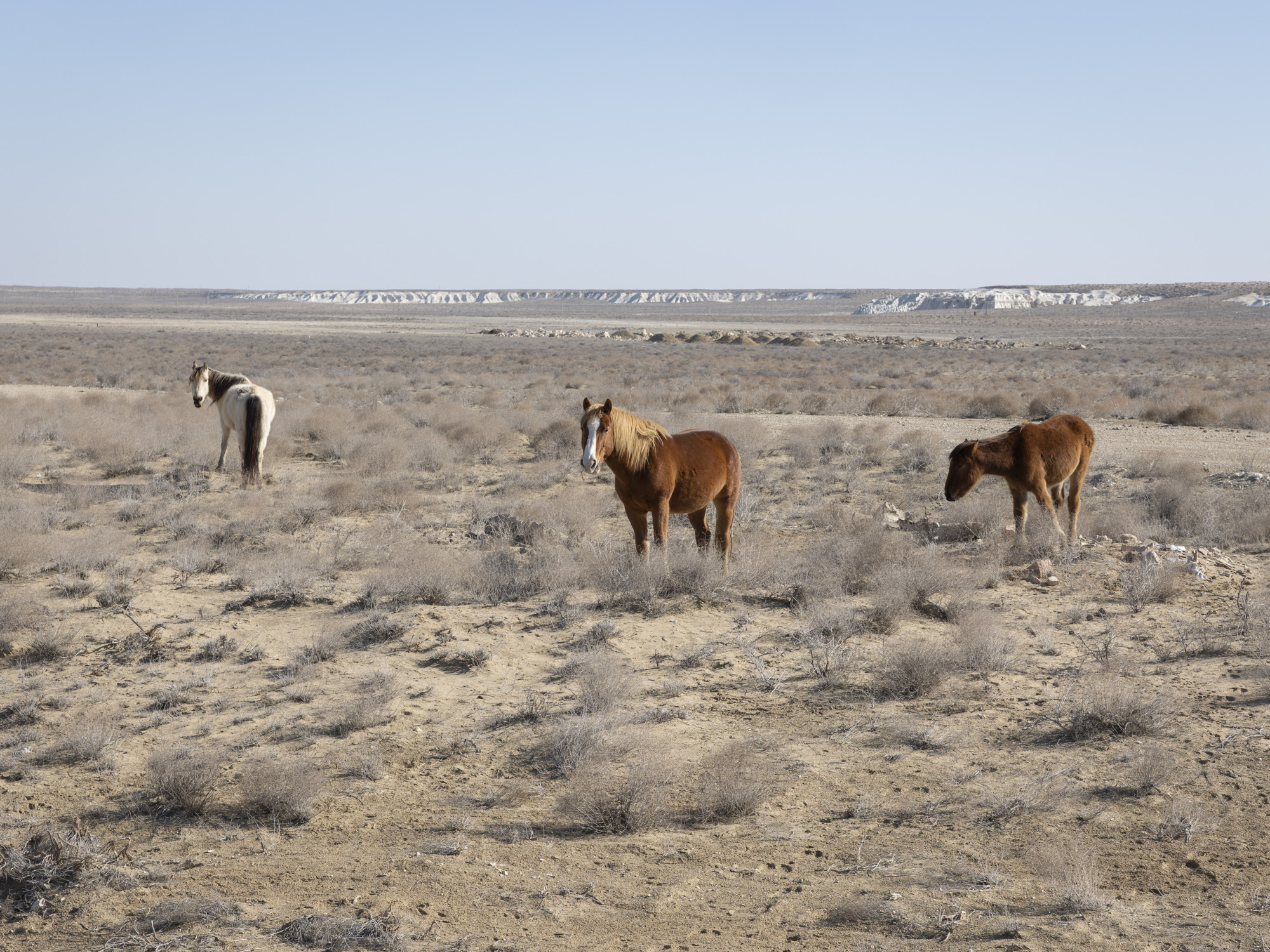
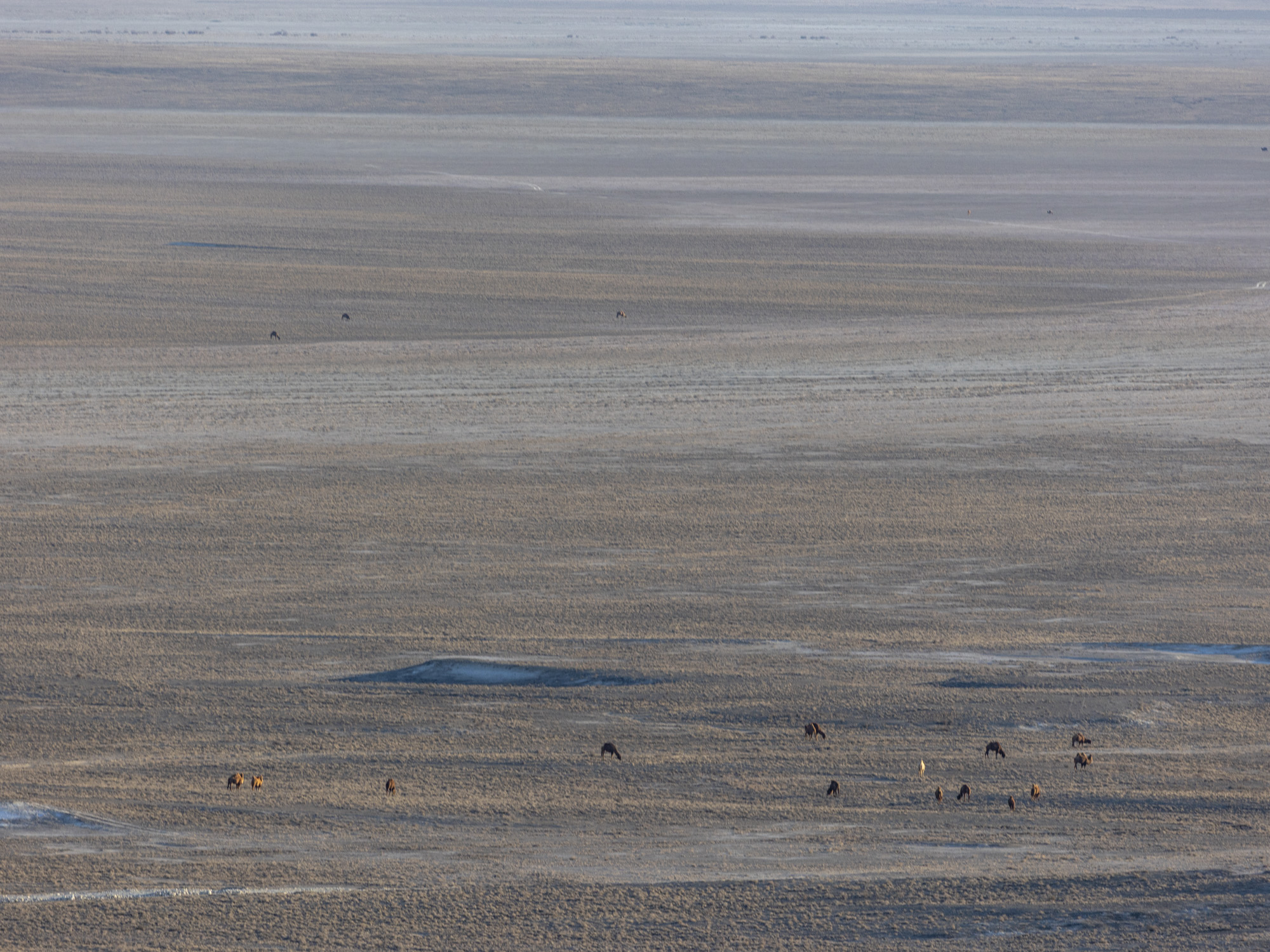
Camels break the pattern of the shrubs as the sun sets a little later. More pauses along the way, between canned food and candies eaten like peanuts, a sweet donation from the mosque. Dust settles over us like a light blanket, lifted by the wheels and by herds of wild horses that had run alongside us just hours earlier.
Suddenly a small climb, its highest point hiding the view beyond. The mind knows there can be no surprise, yet instinct suggests that after a “pass,” a new vista will open up. Deceptive. We keep falling for the same trick, repeatedly disappointed by what we already knew we would find. If the GPS didn’t tell us with certainty that somewhere out there, at an exact number of kilometers, there is a road and then a town, we’d be close to losing our minds. And it wouldn’t take much.
Seven days in a row, five between two inhabited centers, three to enter and exit the dirt “limbo”: there, on the first morning, a man surprised us as we cautiously stuck our heads out of the tents. From the window of his jeep, he looked at us as if he were having a hallucination. Those, however, are usually a summer occurrence. Now, at the end of winter, there can be no doubt: we are really there.
This project is reader-supported.
If you’d like to support independent slow reportage from the road and receive field notes, unpublished photographs and behind-the-scenes writing from the journey across Asia by bicycle, you can join the project on Substack.
You can also support the journey directly via PayPal or Ko-fi.