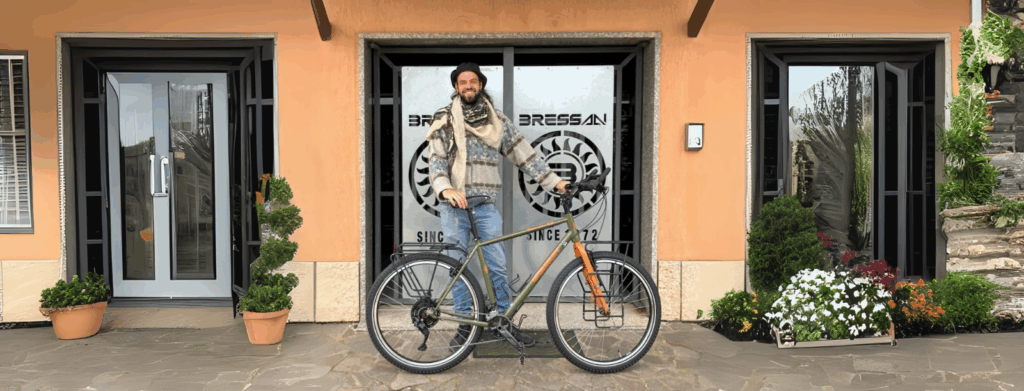
Leaving Kathleen’s house is sadder than I ever imagined. For days on end, everything seems to be trying to delay my departure. The front rack, which doesn’t find the right welder until I’m already with one foot on the pedal. The flu that strikes me. The never-ending mountain of photos I have to edit. Nilde, a little kitten Kathleen asked me to name, who’s slowly growing up in my sweatshirt, curled up against my stomach. Kathleen herself finds an excuse every day, insisting that it’s absolutely unwise for me to go. Not yet. After yet another week, though, I’m off.
Leaving Duhok means closing a series of chapters of the journey all at once: Kathleen and Nilde, Iraq, and summer. It means officially beginning to face winter—one of the biggest uncertainties this whole project has presented me with.
Getting back on the bike is wonderful. The temperatures are perfect, just under 30 degrees. At night, the full moon shines over the golden fields among the mountains. The people continue to be wonderful; they shower me with fruit and drinks and invite me to stop for lunch. At the edge of the last village before the border, as the sun sets, I’m also invited to say my goodbyes—for my final night in Iraq. The man who pulls over and invites me to his home is Mohammed, the Peshmerga general of the region.
After getting lost and finding myself in the heart of the military camp, escorted by men who don’t even know where to take me, I finally arrive at the right place. I’m greeted by Azad, one of the general’s officers, who has taken it upon himself to look after me. With blue eyes and a crew cut of an almost violet gray, a mix between Action Man and singer Robbie Williams, he takes care of me thoroughly. He carries my bags, lifts my bicycle, and carries it up the stairs to safety. I struggle to push it with my arms. He heats water for my shower, makes my bed, serves me dinner, and even gives me a vigorous back and leg massage before bed, with a decidedly military touch. That evening, about ten of us gather at the officers’ house. We eat, chat, and play cards. Azad pulls out a photo of a woman. “She was my mother. Saddam Hussein’s men killed her.” A 43-year-old Peshmerga soldier for 25 years, he has fought against everyone: the PKK, ISIS, the Turks, but above all the Arabs of Federal Iraq. The mountainous region, famous for its apple orchards, has impassable borders that are subtle but very severe. Everyone who fought here left their landmines, and people are still paying the price today, in this fragile time of peace. “Three years ago, on the road to Amedi, two Danish cyclists were blown up. They had left the road to set up their tents at sunset. One of them made it, but there was nothing that could be done for the other,” the general tells me. “It was up to me to call Erbil and notify the consulates of what had happened, and then, with a team of engineers, go and pick up the pieces of what remained. The road is closed today. It is too dangerous for anyone to travel in that direction.”
It was already clear in Duhok that Iraq didn’t want to let me go. At customs, a perplexed officer invites me to follow him into a back room with my passport. The reason is unclear to anyone; the language barrier creates another barrier and helps even less. While I’m sitting on the First Officer’s couch at the border crossing, constantly supplied with hot tea, discussions begin to unfold, and with them, the hours. It takes almost four hours, punctuated by phone calls around the country, to finally figure out what’s wrong: the visa renewal, which I applied for online, was issued, accepted, and paid for, but it was never activated. It’s therefore listed on my passport, but it’s not registered in the system. I have been in the country illegally for twenty-one days. Every day is equivalent to a fine, totaling $270.
I fight back in every way. I have already paid for the visa and I don’t feel responsible for the problem. But the Chief doesn’t want to hear about it. His shift is ending, he changes his uniform and, impatiently, bids me farewell. The situation, however, is paradoxical: the only way to leave is to pay the fine, but there’s no way I can do that. Knowing I’ll be leaving, I have spent every last cent of my dinars. Credit cards don’t work in Iraq, which is why even my cash in other currencies is completely dry. Bank transactions to the country are blocked.
Time passes, and I have become a “customs case.” Juma, the non-commissioned officer who has been with me up to that point, is beginning to soften. He understands my situation and my honesty. Other men are taking an interest and trying to offer help. “I have a cousin in Turkey! Send the money to him so he can send it to me.” “I have a friend in London! Try his bank.” “Western Union! My brother is in Ankara, it definitely works. Send it to him.” Nothing works; it seems like Iraq is an impregnable fortress, or perhaps worse, an economically blocked country. Meanwhile, I have relaxed a bit and let go of my nerves about wasting money: a woman had just entered the room and, with a big smile, said something like: “But what value does money have? None. It doesn’t matter.” I thought about the beauty of life, and my anger disappeared. Mahir, meanwhile, is the man closest to me. He’s working tirelessly to find a solution and trying to reassure me. “Four and a half hours. You can’t possibly have been here this long. It’s shameful. I deeply apologize.” He shares his phone connection with me and goes from one customs officer to another, trying to think of a solution. Juma is now completely relaxed: “Don’t worry, there’s no problem. We’ll sort everything out.” There are now five of them in the small room with me, smoking cigarettes and muttering possible ideas. They continue to make phone calls around the country, until finally one seems to be the one that can open the way. A prominent general in Erbil has taken it upon himself to contact the Ministry of Immigration and officially ask for forgiveness. But there’s a problem: it’s 4:30 PM, and at 5:00 PM Turkey closes its doors. It’s a race against time, and the ministry, if it were to accept, would certainly need more time.
4:50 PM. Six hours have passed since I arrived. Mahir picks up the phone again, this time calling the Turks: “Will you wait for him? We’ll send him over in ten minutes.” I don’t understand what’s happening, but the whole place is springing into action. We rush out of the room, and around me I see men I have never seen before gathering. Taxi drivers, customs officials, others passing through. Eleven of them are taking out their wallets: some with American dollars, some with Iraqi dinars; in a short time, the $270 fine is collected. Juma races against time. From the Turkish side comes an ultimatum: they’re closing the gates. His fingers race across the keyboard, counting the money, recording the exit details and the fine paid: he stamps my passport, gives me the receipt for the penalty, and shakes my hand. “Run.” My eyes are watering, I’m speechless. I’d like to thank everyone individually, but time doesn’t allow it. Mahir hugs me, he’s overjoyed that I managed to get out. In a flash, I’m in Turkey, they stamp my passport and close the gates. I turn around one last time. They’re all still there, waving goodbye. My last glimpse of Kurdistan and Iraq. I bow.
Night has fallen, and I have set up my tent just past the border, on the side of the road. Golden jackals are howling a few steps away from me, a couple just outside the tent. I text Mahir to thank him and ask how I can return his money. Shortly afterward, I received this reply: “Hi, Emi. We’re so glad we met you. If only we’d known this would happen, we would have sent you away sooner. We apologize for sending you away so late. If you’d asked for a piece of our lives at that moment, we would have given it to you with thanks and without hesitation. I apologize again and again for sending you away so late. And I was talking about you with my friends. Where has this boy gone now? What does he eat and drink? Where will he sleep? We were talking about this among ourselves. I wish we’d given you some money. Maybe you’re somewhere and in need, but we didn’t think about it at the time. We always think only that we need to close the gates.”
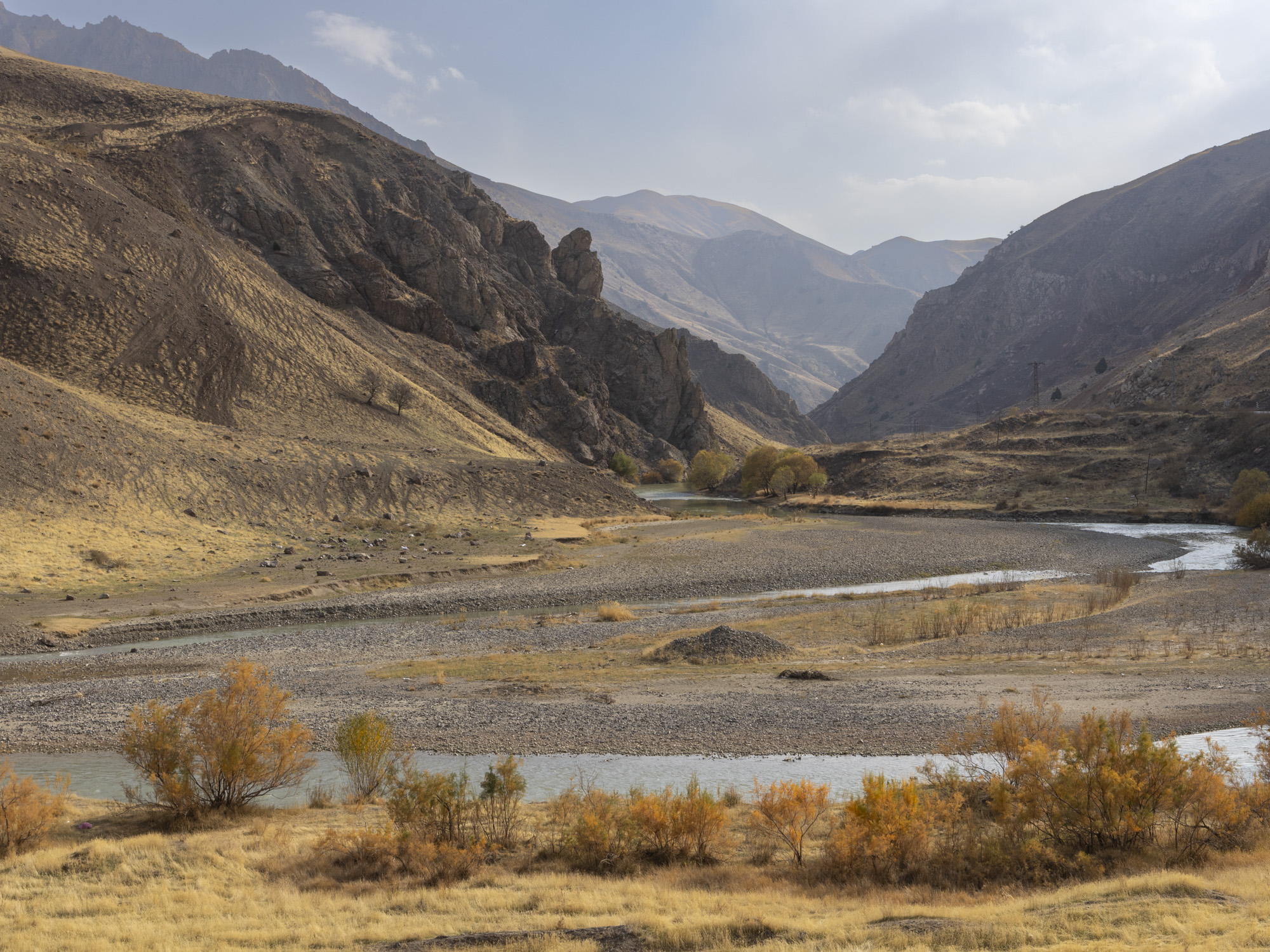
The Hakkari Valley is stunning. A strip of asphalt at the bottom of a deep gorge, squeezed between desert mountains and snow-capped peaks, winds along an almost imperceptible climb, slowly guiding me higher and higher. I’m in the heart of Turkish Kurdistan, among the valleys that were once strongholds of the PKK, the most violent and dangerous places of the historic ethnic conflict. Military checkpoints and Turkish outposts are frequent. There’s practically no corner of the route that isn’t obscured by the watchful eye of some fortress, castle, or army camp. Peace, however, has finally returned, albeit only a few months ago.
Villages are very rare; the few that appear are guarded by groups of elders drinking tea. “Çawa yî?” Among them, they speak Kurdish, a repressed language in Turkey that continues to survive here. When I’m invited to lunch in the canteen of a zinc mine, the people welcome me with great pride: “It’s very rare to see foreigners around here. But when we see one, we’re delighted. We’re so eager to make ourselves known, to showcase our culture,” the mine manager tells me. After nearly two months in Iraq, shaking a woman’s hand feels strange. I ask her how things are in the region now, but she lowers her gaze and shakes her head. After a moment of silence, she changes the subject. “Would you like to spend a day in a Kurdish home? If you’re in town in the next few days, you can stop at my family’s house.”
Crossing the border, Kurdish generosity hasn’t changed, even though most of the time they don’t even know what’s going on just beyond that imaginary line.
For every fruit I eat, I get three. Still loaded with Azad’s gifts, I look like a traveling convenience store.
For days, I continue to wave at the cars I pass by, raising my index and middle fingers in the classic peace sign. Only much later, just before leaving the country, will I discover that in Turkey this gesture doesn’t speak of peace: it’s the symbol of the PKK. I probably spent weeks declaring my support for the Kurdish guerrillas to soldiers, police, and checkpoints.
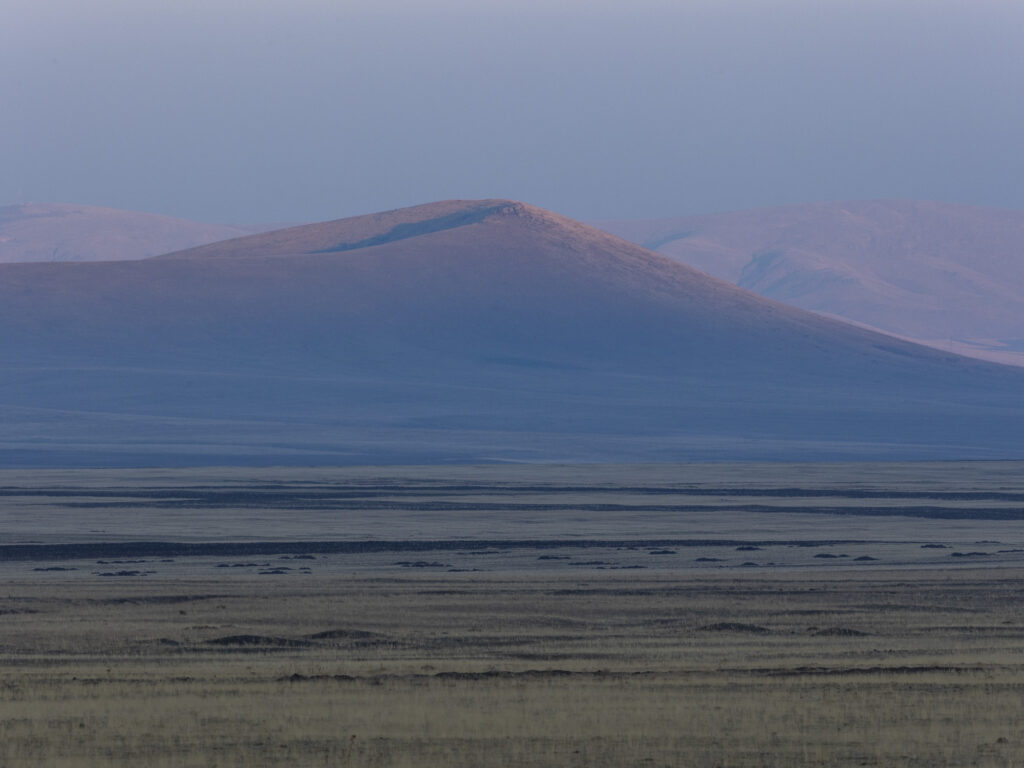
In Hakkari, I don’t stop. Entering the great mountains has turned the season upside down: the temperature, in the space of 24 hours, has plummeted by almost thirty degrees. My pedaling is now a race against winter, which seems to be waiting for me in the shadow of every rock face. Fortunately, on the second night, I find shelter in the mosque of the small village of Hatipova, on a desert plateau at 2,000 meters. I had stopped to ask if I could fill my water bottles so we could camp and cook something hot. Murat, the imam, however, invited me in. Smoke soon began rising from the mosque’s chimney and joined the others in the village. The great mountains faded to pink, the stars took their place on the immense panoramas, causing silence to fall upon the flocks and cattle. For the first time on the journey, frost settled over the land.
Murat and I talk at length about Islam and religion, sitting on the couch next to the stove. “I know that many in Europe have lost their faith. More and more people are atheists, they have stopped believing,” he says in a calm voice and a humble demeanor, but a satisfied smile flashes across his face. “But when a plane is crashing, there are no more atheists. Suddenly, everyone has a god to pray to.”
He tells me, as a Sunni Muslim, how he believes everyone is a brother, including Shiites. Then, with profound respect and sincerity, he responds to my concerns about the role of women. “They are very important to us. We protect them, we give them the chance to be mothers.”
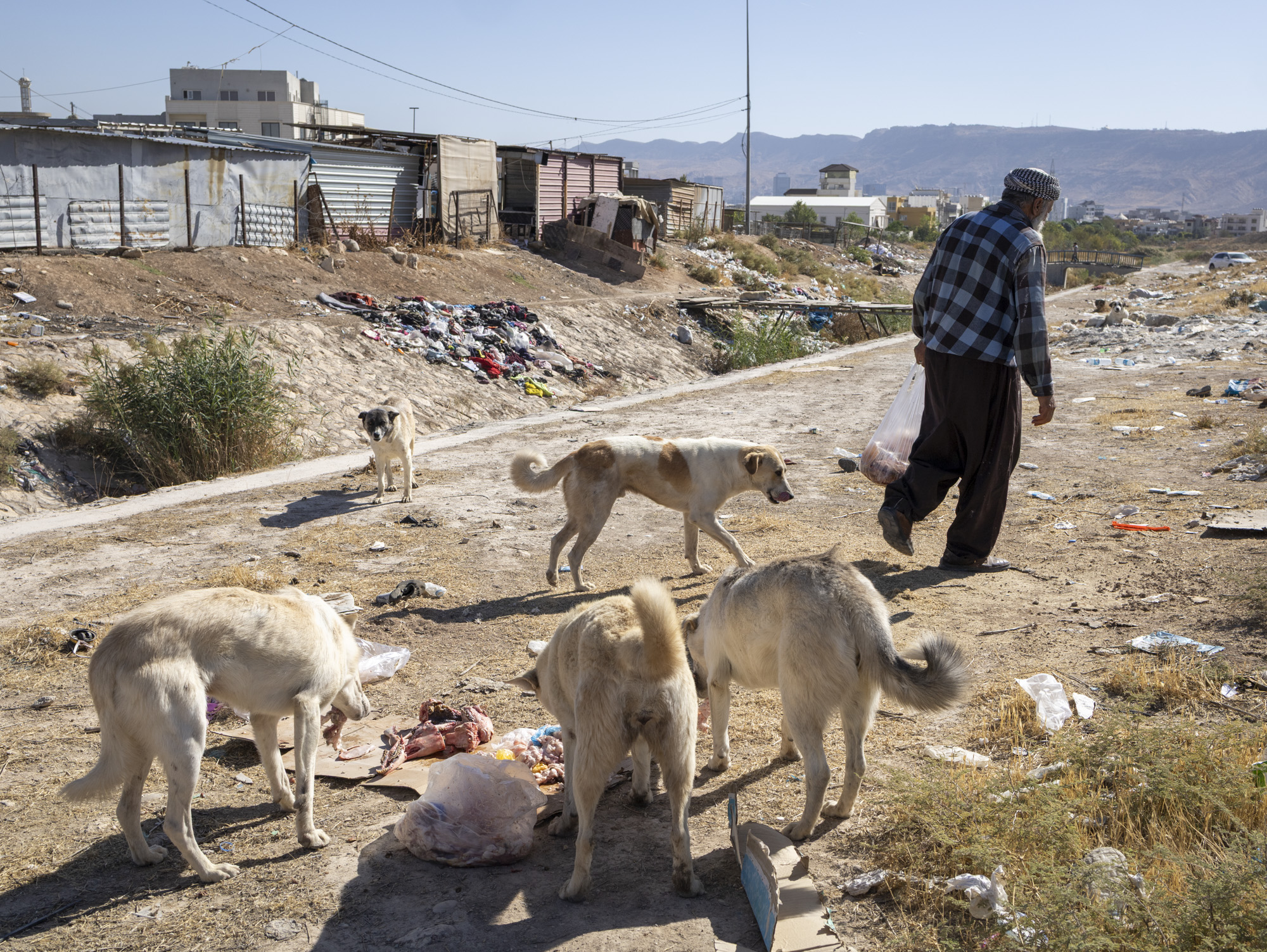
The road continues straight and higher, towards the mountain pass and the snowfalls, which in some places blend with gigantic flocks of sheep. The emptiness conceals a handful of villages and fades into infinite remote spaces, often inhabited by packs of enormous stray dogs. Cold winds cut across the rocky ridges, and in the morning I wake up trying to shake off the first ice of the season. A night in a tent warns me that my winter gear needs to be reinforced. I arrive on Lake Van and in the city of the same name after seven days of travel, exhausted from the cold and fatigue.
In the city, Hêvî awaits me, or rather, her apartment. She left for Hakkari, but refused to turn down my request for a stay on couchsurfing, leaving me the keys hidden and a stocked refrigerator. She lets me have her house for three nights, continuing to make sure I’m okay and that the refrigerator is emptied.
While the Suphan volcano sleeps amid the smoke of burning wood and keeps an eye on the great lake and the city, exhaustion keeps me indoors for a long time. I venture out into the streets rarely, drawn more by the live music I discover vibrating in a series of bars than by any real desire to visit the city. Having a beer in a crowded bar, with someone playing music, is an experience I miss so much that it makes me get up from the couch and face the cold, despite the week I have just had. However, as kind as they always are, the Kurds in these areas prove much gentler than those in southern Iraq. Just a week ago, I would probably have met half the locals in a couple of hours; here, I can barely exchange a few words with the waiters. I wait for the moment when the beers and cocktails unleash the restraints on people, but it never comes. The best I can manage is a few offered cigarettes, which, by the way, I don’t smoke. Kurdish pop doesn’t warm my Latin veins, so I fall back into the comfort of the couch sooner than I’d like.
Grey days between huge volcanoes and increasing shivers push me north. These are days of silence, broken only by the raucous cries of dogs chasing me angrily. The usual wall, so beloved by Turkey, marks the border with neighboring Iran. The road climbs before plunging spectacularly towards the foot of Mount Ararat and its two majestic peaks.
I keep stopping to gaze at it. From the plains of Anatolia it suddenly rises, immense, covered in ice, as if it belonged more to the sky than to the earth. It is a mountain that alone fills the horizon. Biblical tradition tells us that it was here that Noah’s Ark came to rest after the flood, making Ararat the symbolic place of a new beginning for humanity. Today, however, it dominates one of the most complex corners of the world, where Turkey, Iran, Armenia, and Azerbaijan touch. Motionless above borders, armies, and tensions.
I remain motionless too for a while, as the peaks disappear into the clouds, and the deluge takes hold for the long hours of the night and the following morning.
I’m deeply grateful to Zafo, who, having a camping spot available, lets me have an empty room for the same price, which I can use as if it were my tent, sparing me the first real winter storm.
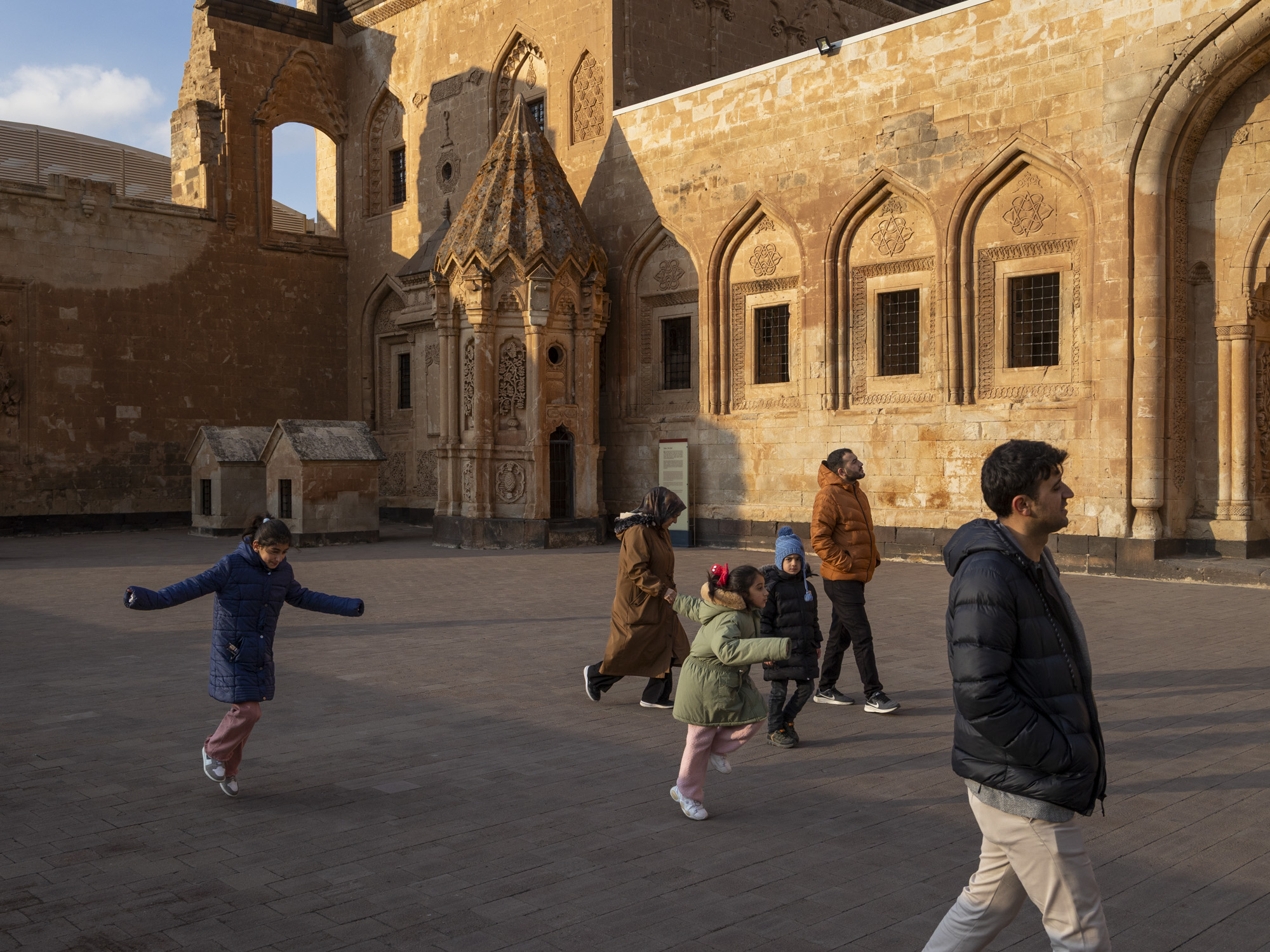
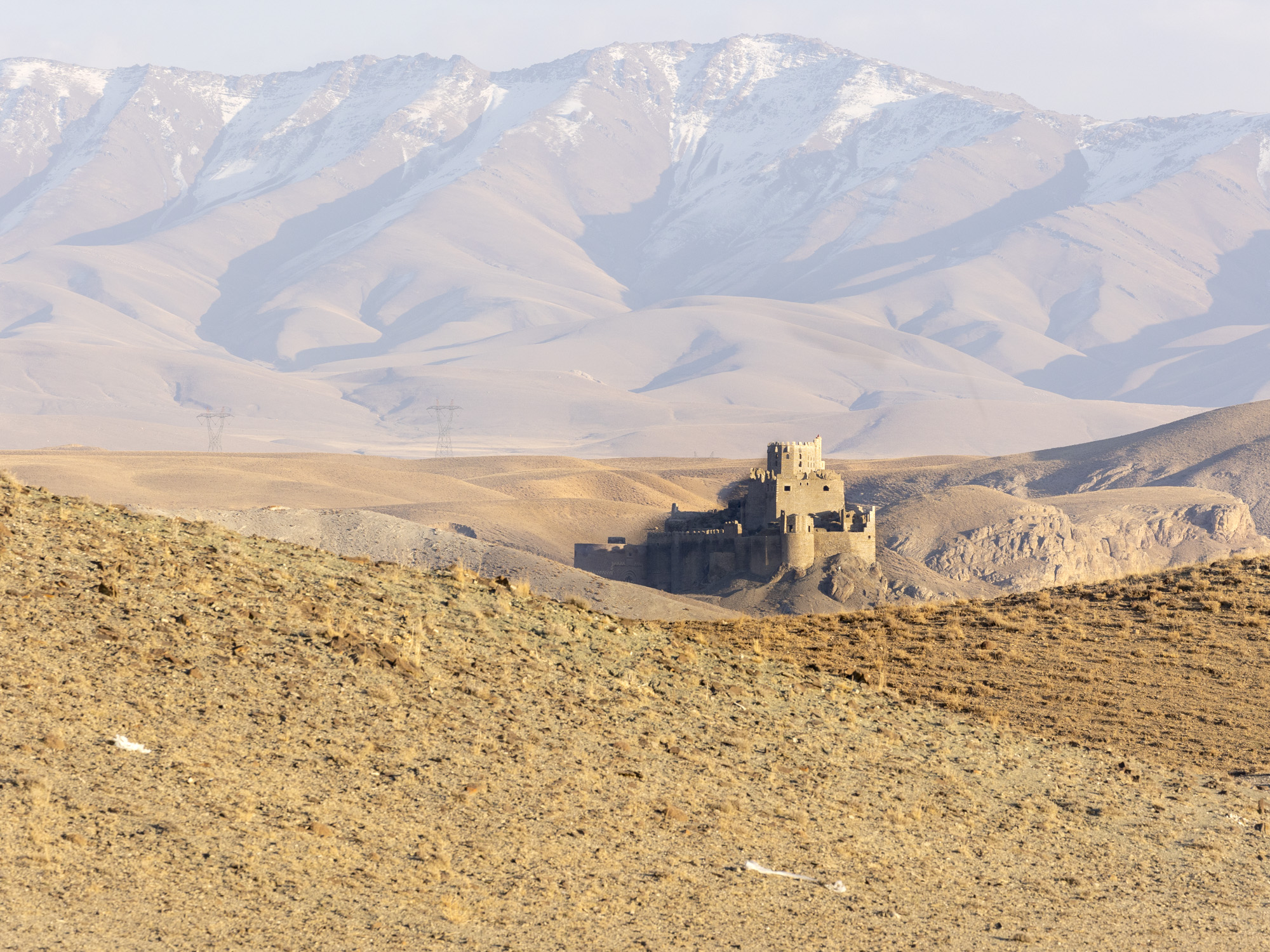
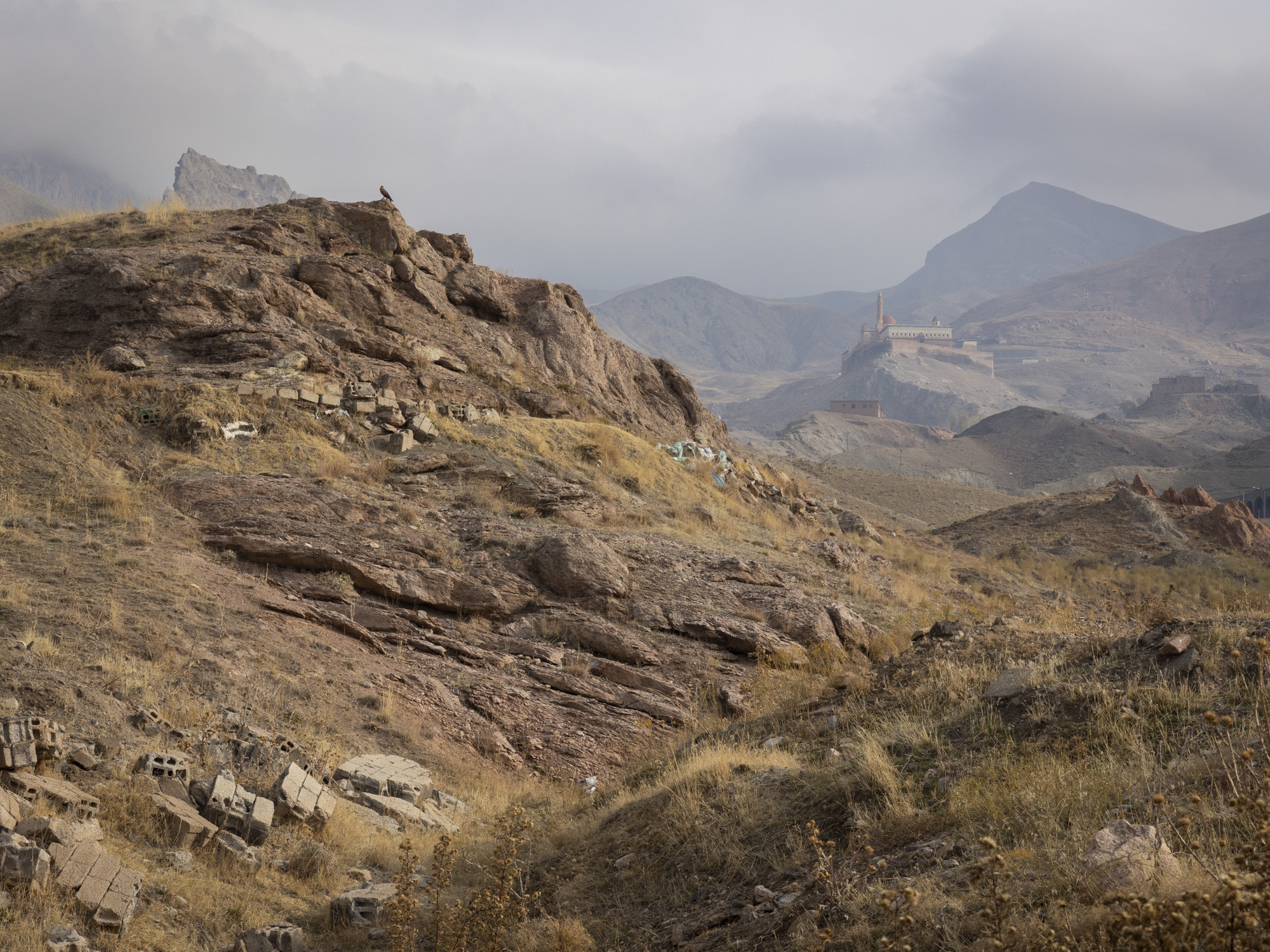
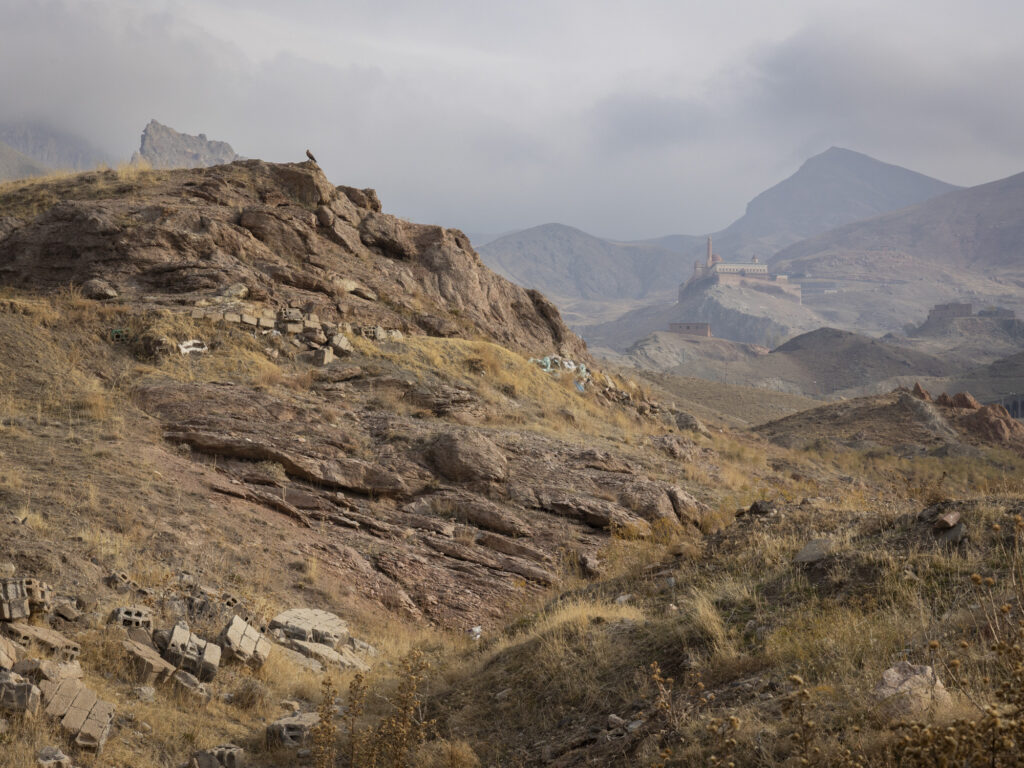
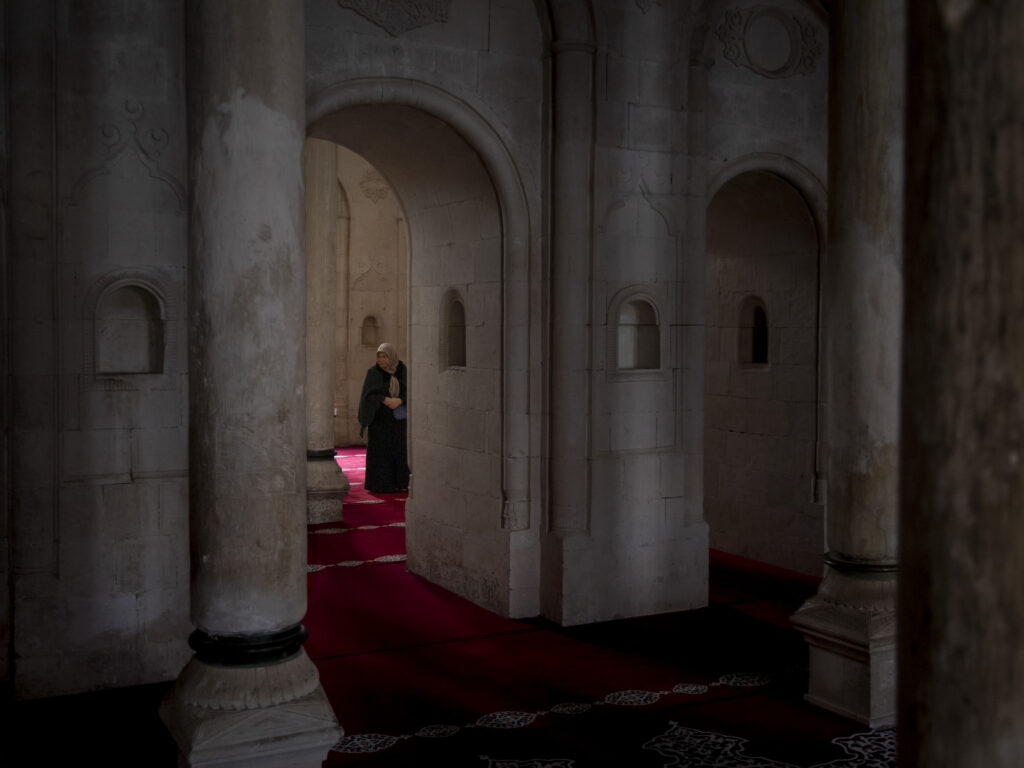
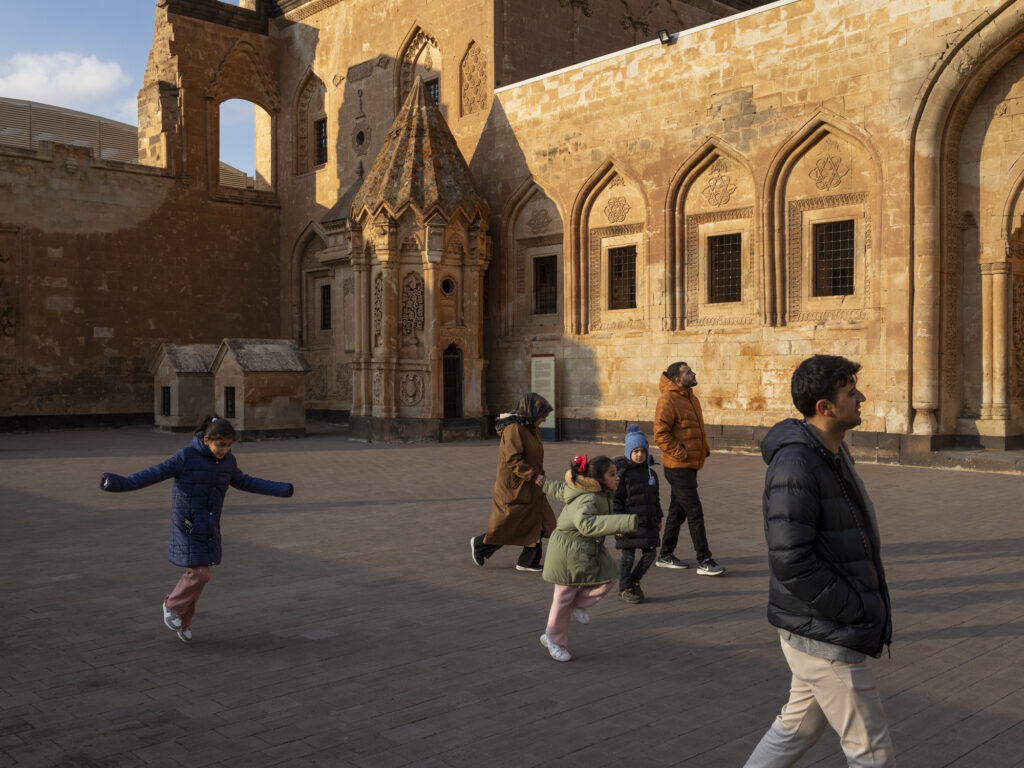
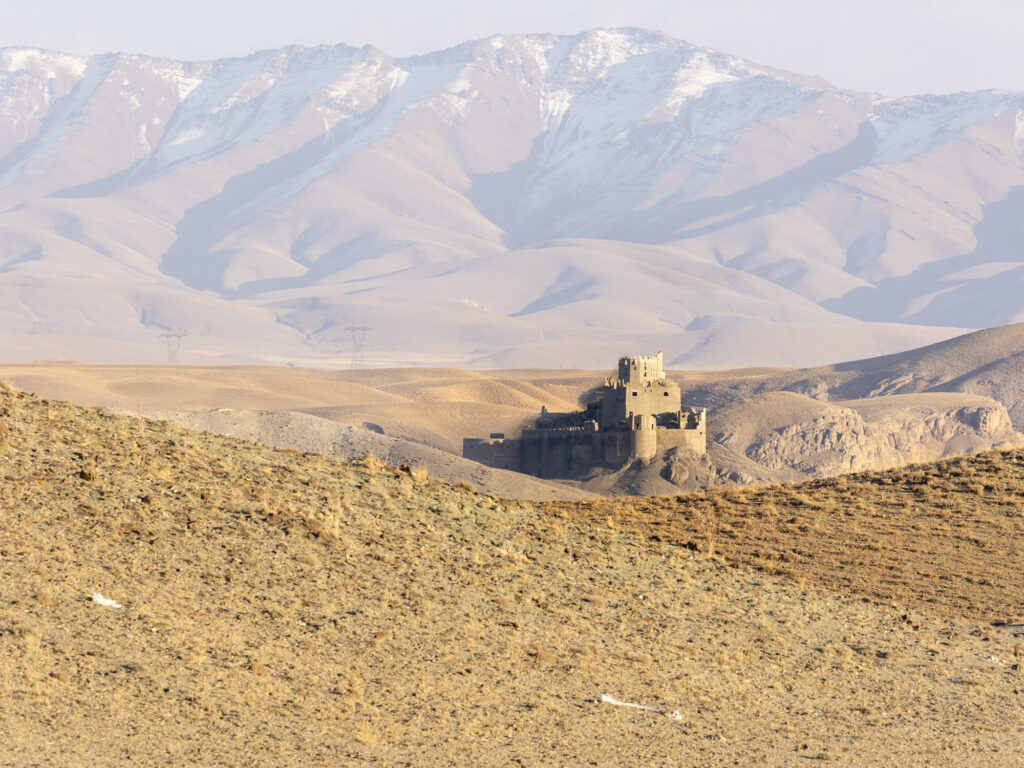
I’m on the outskirts of Doğubayazıt, a few steps from the majestic Ishak Paşa Palace, one of the Ottoman Empire’s most extraordinary residences, which has watched over these borderlands from a rocky spur overlooking the plain for over two centuries. I wander through its courtyards during a glimpse of afternoon sunlight, wrapped in a cloak of icy wind, to then enjoy one last view of Ararat at sunset. From that evening onwards, the clouds will devour it again, only to return to me several weeks later, when I will see it from its most nostalgic and longed-for side: the Armenian one.
Winter calls ever more insistently; I have to push. My breaks are brief and essentially weather-related. So I’m soon back on the road. I continue north, head down, past volcanic lava flows and the town of Iğdır, reaching Tuzluca. Sheep and goats fill the outer neighborhoods of the town, surrounded by deep-veined red mountains. An echo of children calling for “money” tries to stop me in the streets, but then they protect me with stones from the usual aggressive dogs. I head back into the middle of nowhere, to enjoy one last night below 1,000 meters, with pleasant temperatures. The climbs await me the next morning, silent, exhausting.
Managing my layers is a puzzle. As I climb, I warm up and sweat; as soon as I stop, a breath of wind is enough to make me shiver to the bone; a short descent turns the sweat into agony. It’s a constant adding and removing layers; so many times I make mistakes and find myself praying not to get sick.
Having struggled to reach the village of Digor, I look for any way to warm up. I duck into one little shop, then another, until a group of men invite me into a carpenter’s shop. I’m freezing. We sit in a tiny wooden room heated by a stove. Besides me, there are four men, dirty from work and with lined faces. They serve me boiling hot tea, which I drink with exhausted greed, glass after glass. No one says a word. Above my head, a small television speaks in a firm voice: “Turkey, democracy!” Erdogan’s voice echoes sternly in a long speech, the words seem to emerge from the screen as solid as bricks. After a few minutes, filled with tea, work, and perhaps even democracy, three of the men get up and disappear silently. Only one of them remains, and at this point his curiosity melts. “Do you have a heater with you?” he asks, impressed by the fact that I’m about to sleep in a tent. “It’s really cold outside. And that’s nothing. But here you are in the Kurdish Anatolia region, no matter what door you knock on, someone will at least give you something to eat.” And so it happens, because just before we leave, a young man arrives and hands me a huge sandwich. My host had ordered it shortly before.
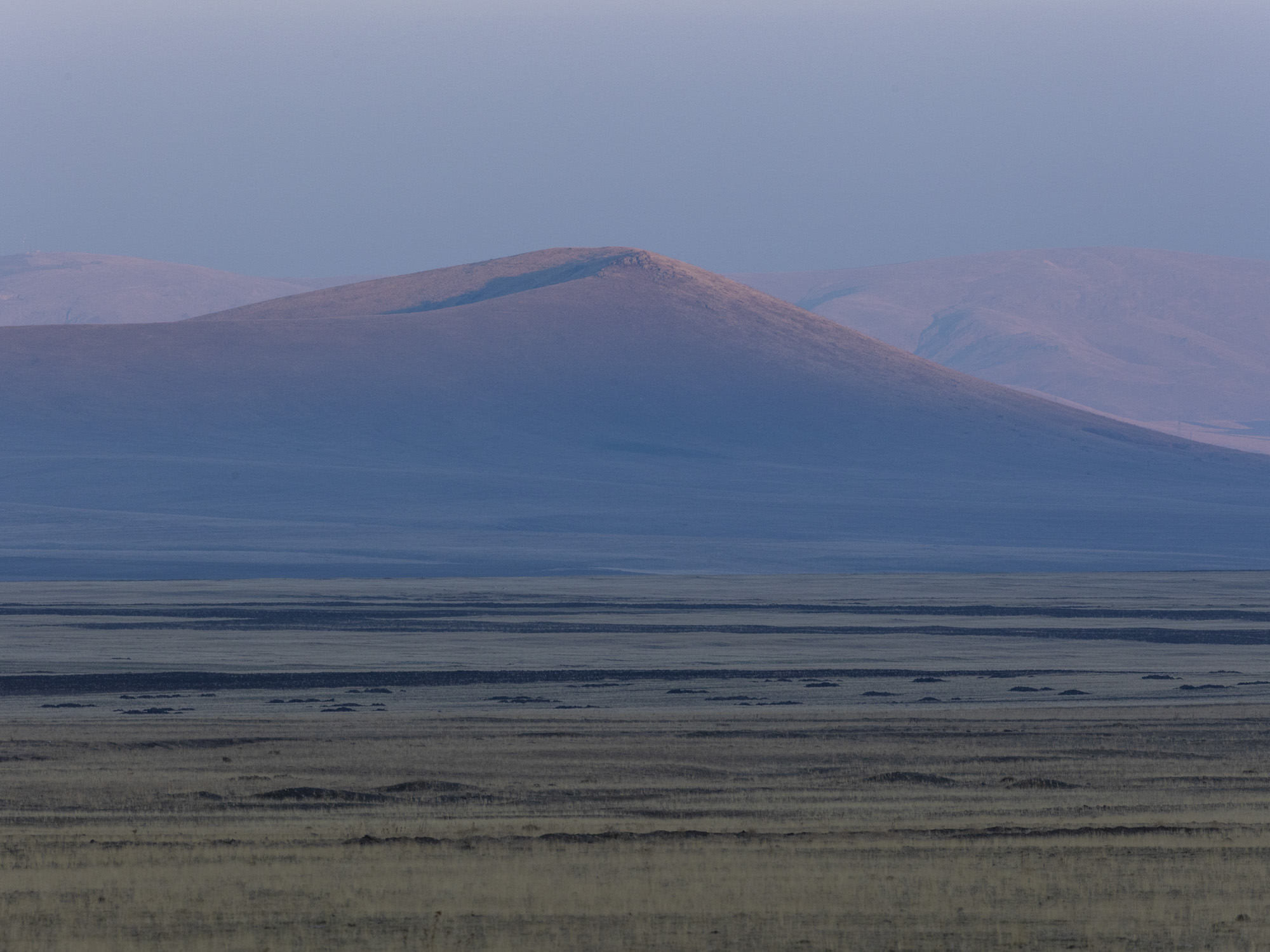
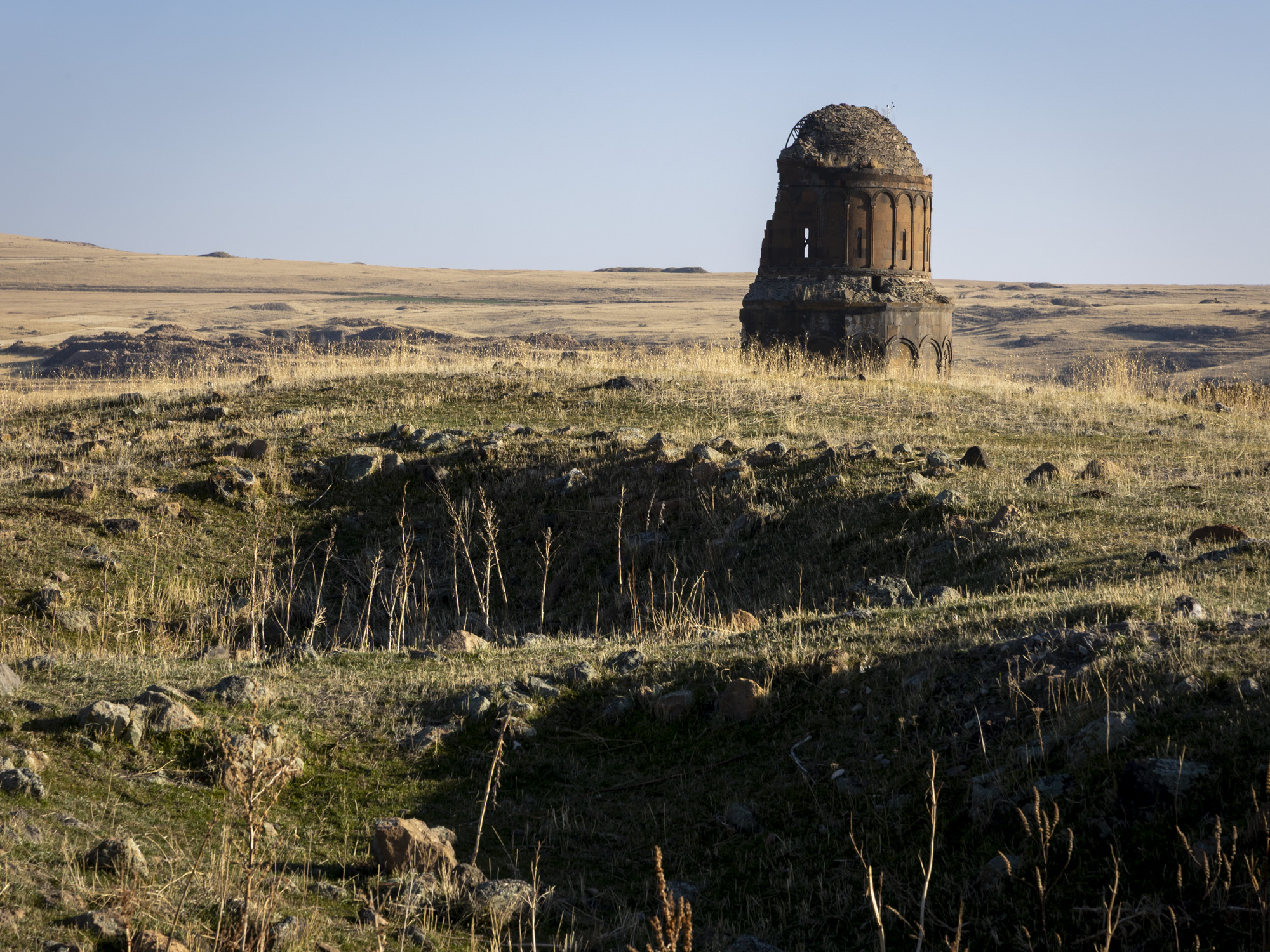
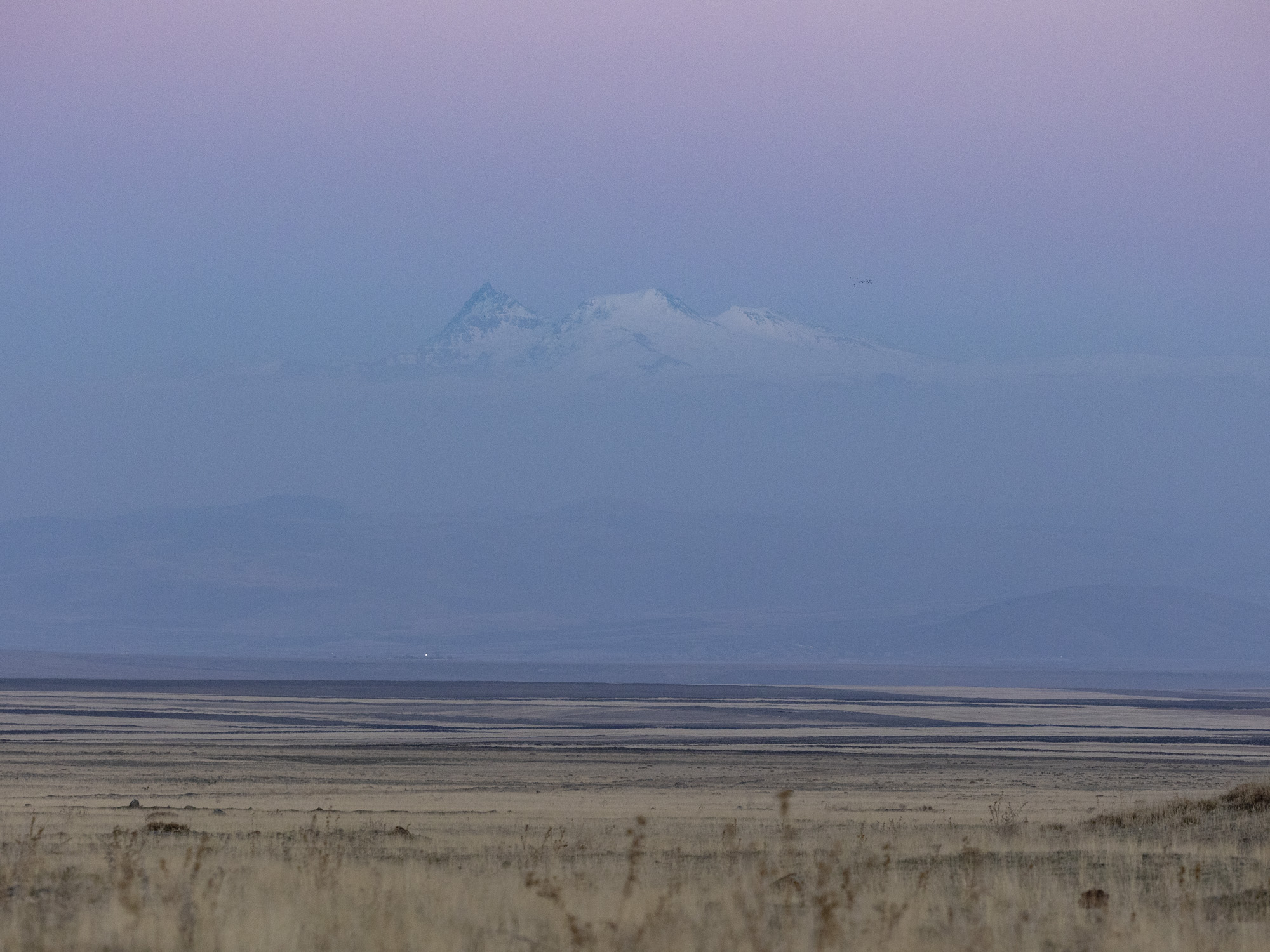
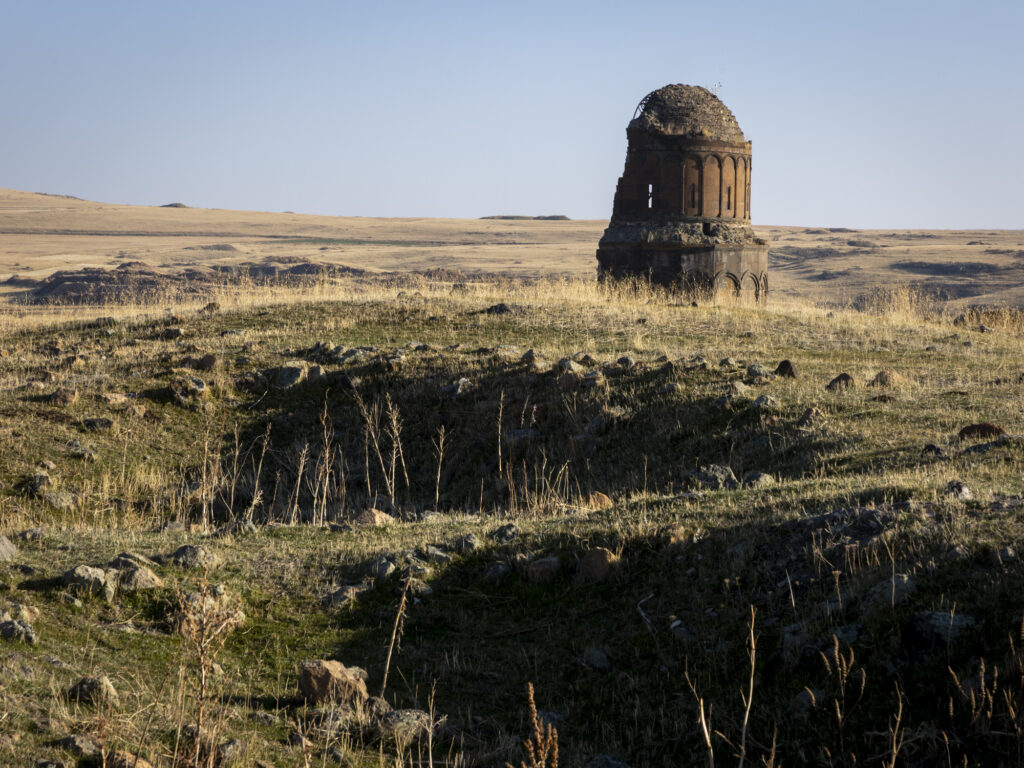
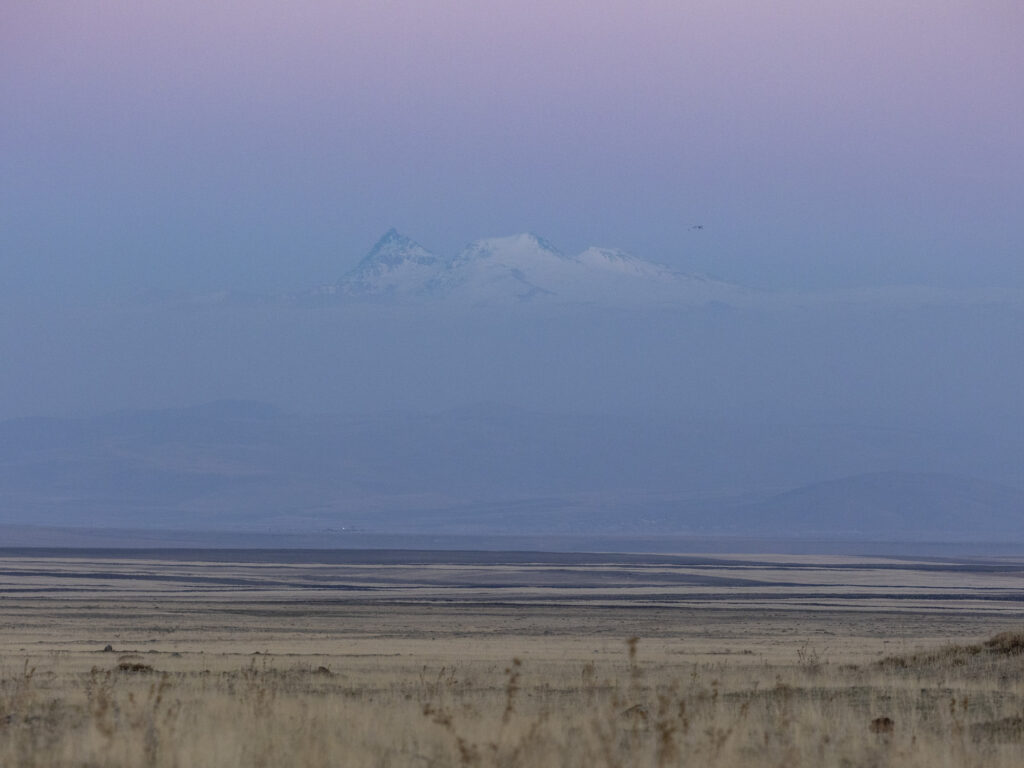
Sleeping in a tent is starting to become a difficult battle, with new and increasingly complex problems to face. The night drops below zero, the humidity around the tent freezes, and so does the vapor from my breath inside. As soon as the sun comes out, however, that thin layer of ice begins to melt, turning into rain right inside the tent. The water bottles are hard as rocks. In the morning, it takes several hours before I can take more than a few tiny sips. Furthermore, I’m forced to put on so many clothes that it now takes two and a half hours in the morning to change and put everything away, and almost as long in the evening to get ready. Even during the day, things aren’t easier; the constant cold saps an incredible amount of energy. So all I think about is crawling into my sleeping bag and resting in the warmth. Things, however, are getting worse day by day, because despite my most ingenious attempts, with plastic bags placed everywhere like buckets, and other devices, my goose down sleeping bag is now more wet than dry and the tent is soaked. A visit to the ruins of Ani, the ancient Armenian capital now abandoned to the steppe winds, and the marvelous view of the Aragats volcano, already in Armenian territory, do not cheer my exhausted body when I stop to sleep in Arpaçay. The night is a silent blizzard. I toss and turn in an attempt to find a warmer position, but I’m enveloped in a humid world and freezing below zero. I have the right gear for a pleasant night, but the conditions it finds itself in after many days of travel without time to dry out make it much less efficient. The hours don’t pass, the sun doesn’t rise. My belly also gets in the way, demanding to be relieved in the middle of the night, but I have no intention of sticking a finger outside. I’d lose the little precious warmth I have managed to save. I turn. I toss and turn. I shiver. Then, finally, the tent gets a little lighter, it lights up, a first ray of sunshine enters, I manage to find a corner of warmth. The ice begins to melt. It’s raining inside.
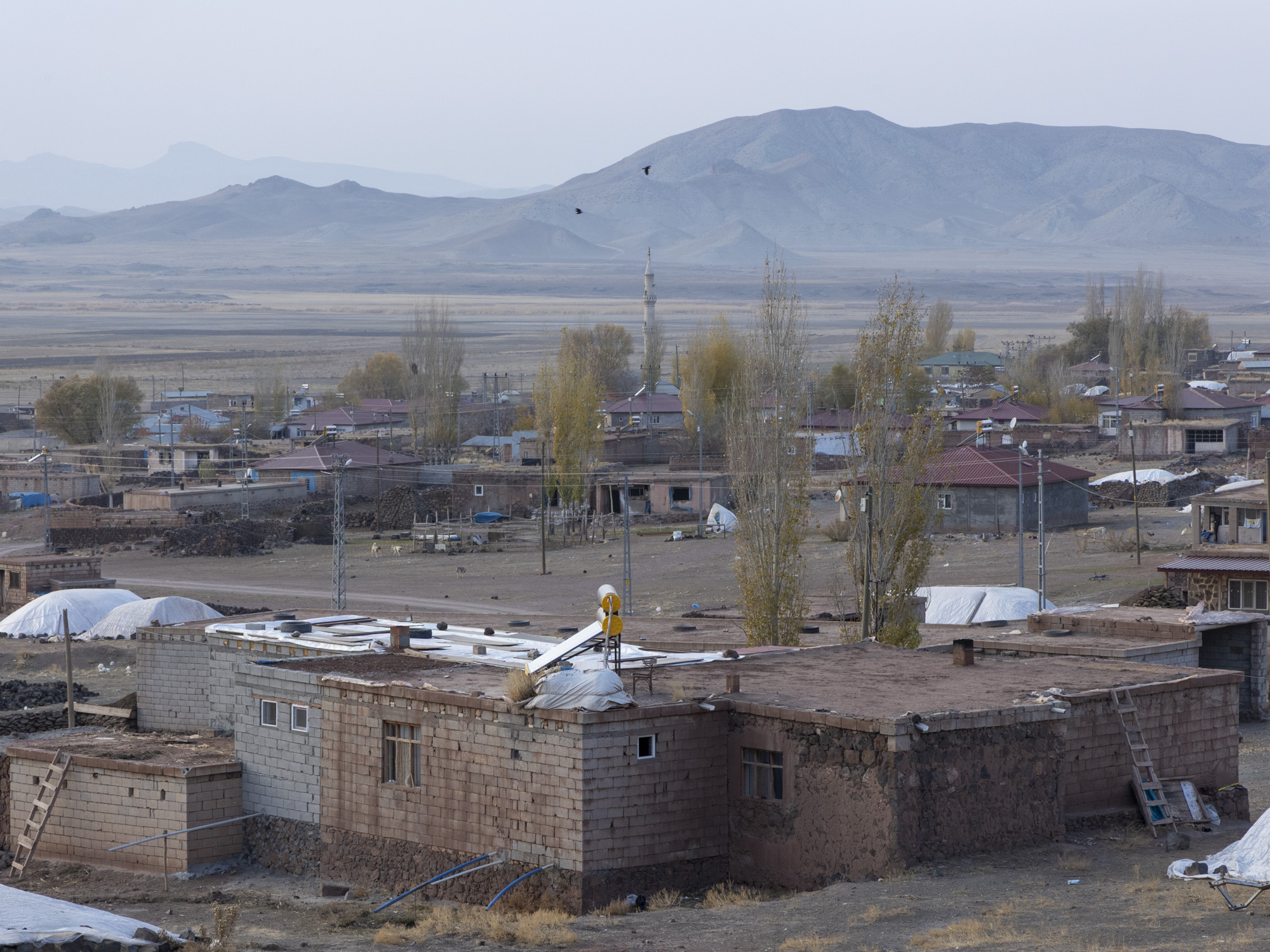
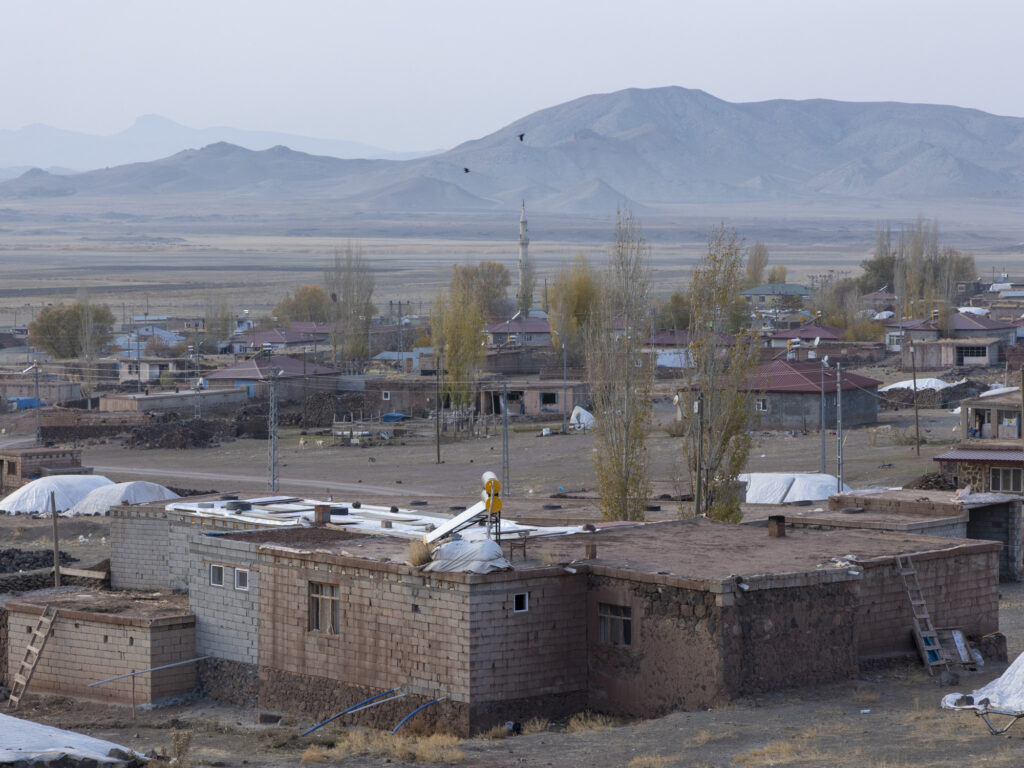
It’s only mid-November. The areas I have crossed in the last few days are among the most isolated and poorest in Turkey. Inhabited by very few people, who, except in the regional capitals, are practically all shepherds. The villages are made of stone, with a few tractors here and there and mountains of manure. The electricity comes and goes, with frequent blackouts. There’s no running water, no heating. All around are mountains and volcanoes, in a completely desert landscape: there are no trees to cut down to heat a house. Winters easily drop to thirty degrees below zero. Even finding a grocery store is difficult.
For some years now, in the West, there has been increasing talk of a return to nature. We dream of simpler lives, slower rhythms, a more authentic relationship with the land. We wonder when we lost all this, how we distanced ourselves from what is essential.
Pedaling through these regions, however, I begin to suspect that our nostalgia is highly selective. When we imagine a life immersed in nature, we almost always take for granted electricity, hot water, heating, internet, a convenience store just a few minutes away. Here, nature isn’t a weekend in the mountains or a house in the countryside. It’s a cold that seeps into your bones for months, it’s isolation, it’s living hundreds of kilometers from the most basic services.
Perhaps the question isn’t when we lost touch with nature. Perhaps the question is how much we’re really willing to give up to find it again.
In these places, however, the simple life isn’t a philosophy. It’s simply life. In the small village of Esenkent, near Ani, an elderly man invites me into the courtyard of his house to drink tea with him and his wife. They bring me vegetable soup with some bread, accompanied by a few silent smiles. Serving us the entire time is Yasmine, his granddaughter. Two shining blue eyes ask me if I want to marry her. She smiles embarrassedly. She’s truly beautiful, just fourteen years old. Her grandparents’ request, more than an offer to me, seems like a gift to her: take her away from here. I look at the walls of the house with the half-collapsed balcony, at my younger siblings watching me silently and covered in dirt, at the expanse of animal poop filling the courtyard. I smile, close my eyes, and leave.
My body has nothing left. The message, after the last hellish night, is clear: another night in a tent and I’ll collapse. The border with Georgia isn’t far, but crossing it would mean another night in the middle of nowhere. A few kilometers ahead, however, is the last Turkish town, Çıldır. On the map, some travelers mark a hotel.
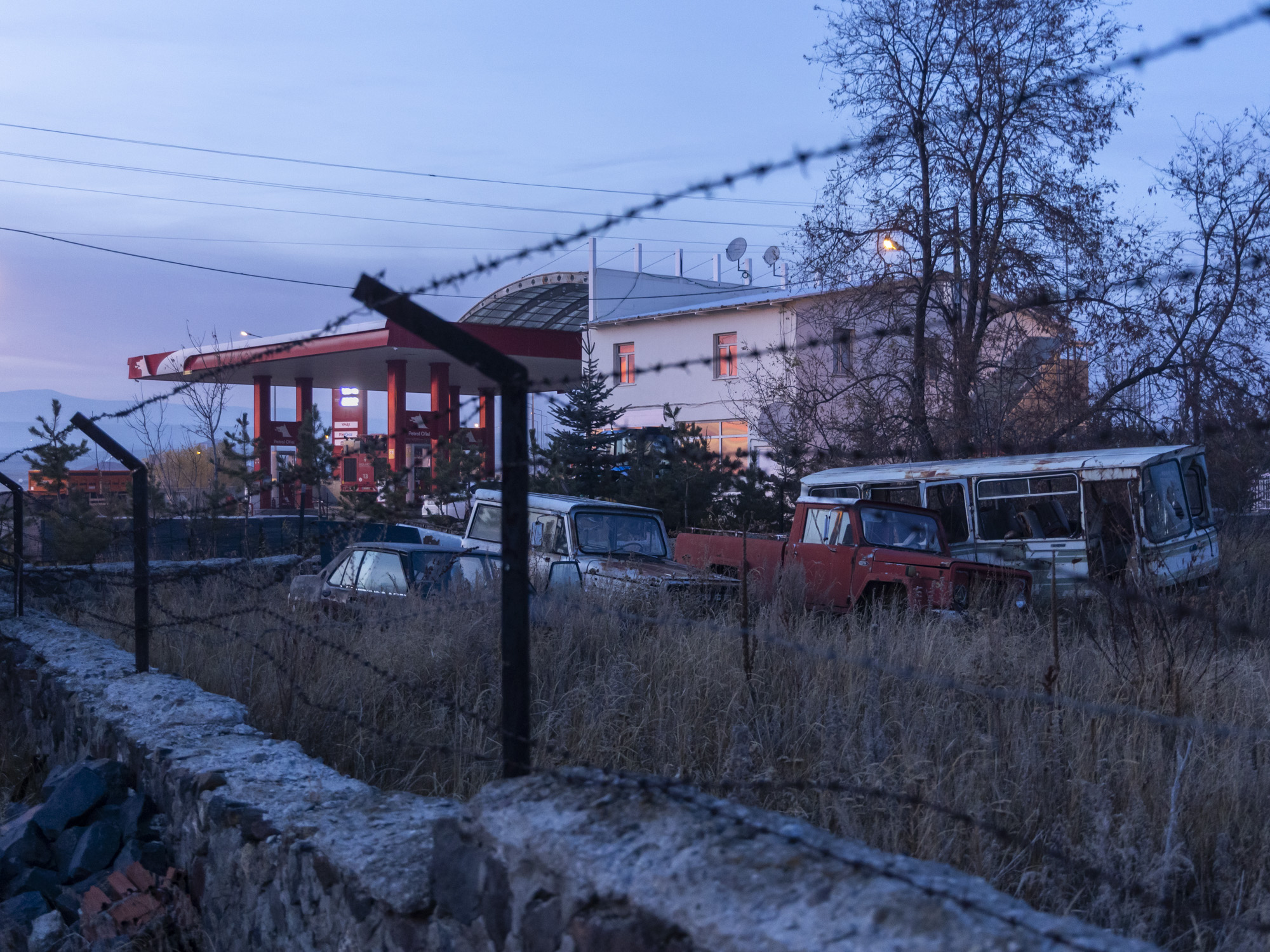
The enormous sheepdogs are now a daily constant. In these areas, they’re truly aggressive and often come down onto the road and surround me, blocking my path. But I’m so exhausted, and with such a fixed goal in my mind—that of a warm room with a bed—that I manage to ignore them too. Something has changed inside me, because for weeks now I have learned to face them coolly, without disturbing my emotions too much. They’re like a climb: they come, they bark, and then they’re over. I arrive in Çıldır in the early afternoon, do a little basic shopping so I don’t have to go out again, and show up in front of the hotel. There’s a note stuck to the dirty window of the entrance, which I’d rather refuse to read: “Closed for the season. Reopening in May.”
My first thought goes to the mosque. I have no choice; I’ll go and ask there. But there’s no Imam at the mosque. Plan C. I cross the center and start asking everyone. A policeman passes the buck: “There’s nothing here.” Thanks. The others aren’t any more helpful either. From one of the classic tea shops, Jam, a guy in his twenties, calls me, offering me something hot. I initially decline, but his kindness quickly wins me over. “Come on, have a cup of tea! And in ten minutes, you’ll be looking for somewhere to sleep again!” He’s right, not so much because of the timing, but because stopping and catching your breath (and your warmth) is often the wisest choice in many situations. I tell him where I’m from and the days I have spent, my desperate search. Jam takes me to heart, locks the shop, and tells me to follow him. He takes me to the local Imam center, introduces me, and tells me my story. Within minutes, the community is active. Initially, they suggest another hotel, just outside the city: “But it’s a very chic place… it costs 45 euros a night.” I decline, and they understand. But I can’t spend the night outside, and I make this clear to them. A changing room, a garage, anywhere. The phone calls begin. Hot tea, chocolates, a chat: the phone rings. Omar, the Imam from the nearby village, looks at me with a smile: “We found a bed for you!”
We go down the street where Mustafa, Hasan, Halil, and Yakub are waiting for me. Four young Kurdish men from the south who came to Çıldır to study. Mustafa speaks good English, having learned it by playing online video games. We head home, and their happiness at being together is equal to mine.
The house looks like this: the front door is broken, it can’t be locked. There should be a padlock, but the latch on that one is broken too. You pass through a first anteroom and enter the house itself. Here, there’s a hallway with a door leading to the shower and another to the bathroom. The toilet, however, is broken, leaking, and you can only pee. The space opens into a small kitchen with shelves and a sink, but no stove. The windows are covered with plastic sheets. It’s almost colder inside than outside. From there, you enter an anteroom where you take off your shoes and where two doors lead to two rooms, the protected spaces. Here, two electric heaters make the spaces livable, each with three mattresses. One roommate is missing, and he’s away; the sixth place seems to be there just for me.
All between 20 and 23 years old, they come from Hakkâri, Diyarbakır, Adıyaman, and Şanlıurfa, all cities I have visited, an acquaintance that immediately shortens the distance between us. Not that we really needed it, because if the world outside is freezing, their welcome is incredibly warm from the first moment. All proudly Kurdish, except Mustafa, who despite being Kurdish, firmly maintains he’s Turkish. “How the hell did you end up here?” I can’t help but ask. “Eh… they sent us to study. There’s a university for ‘social work’; we’re forty students. But if you consider that there are 1,700 inhabitants in the entire village… we’re incredibly bored.” And so everyone’s desires and needs quickly meet. I’m exhausted and need a warm place to rest. They’re offering something new, company, and stories: we quickly decide that I’ll stay two nights. The next day, incidentally, is the championship, and we quickly decide to watch a couple of soccer games together.
In a place where you can be bored, but where hearts are welcoming, you quickly understand how easily people open their arms to you. Shortly after I wake up in the morning, a new guest arrives: Tassilo. His mother is German, his father is Spanish, and he was born in Chile. A twenty-three-year-old, almost two meters tall, he hitchhikes with a dog, and he has a passion for camping without a tent in ruins of any kind, be they castles, ruins, or churches. He’s also coming off a rather terrible night, where he crawled among the rocks under the belly of a castle after climbing up a rock face. He’s wearing a pair of completely torn shorts, the only ones he has left. He stops with us for lunch, along with his companion Fluffo, but despite the pressure from the boys to stay, he’s determined to get back on the road and reach Tbilisi that evening. In such travel conditions, the need for comfort, warmth, and privacy becomes an irresistible force. I fully understand his haste to get back on the road. Mustafa and the others reluctantly accept his decision, but only on one condition: that Tassilo bring a pair of jeans with him. The absurdity of it all boils down to a long argument: he categorically refuses to take them, and they forbid him to leave unless he accepts them. In the end, he has no choice but to give in, even though he puts them in his backpack and continues on in his torn shorts, which are chilly even without them.
Every evening the ritual repeats itself: everyone leaves the house together and goes to the mosque’s restrooms, about 500 meters from home. The days, aside from studying, are spent lying in bed, scrolling through the phone and smoking cigarette after cigarette. Opening the window is impossible; the heat is the only luxury, and so the air quickly becomes unbreathable. Halil has leukemia, is often very weak and sick. He doesn’t care more than anyone else about anything. At 21, he seems to have already lost all hope.
I set off again while everyone is still asleep, and soon I have left the mountain wind behind for the delightful heated tunnel that crosses the border between Turkey and Georgia. I have only had time to fall in love with the policewoman checking my documents, and I’m already on the asphalt between a row of trees. I haven’t felt this in months.
Entering Georgia immediately gives me the lighthearted feeling I have been longing for. People say hello less on the streets, but even more cows have replaced soldiers. The landscape feels smaller, everything is less extensive, even the asphalt, which is full of potholes. The temperature is less extreme, three or four degrees warmer. A dog bites into my bag, but I’m so relaxed I almost don’t notice. I spend the first night on the wonderful Lake Saghamo, where the water bottles freeze, but where the same sub-zero temperatures of Turkey seem gentler, and they lull me to sleep. Then I leave the desert behind for good, re-embracing the green forests, the grassy fields, the lush valleys. Descending toward Tbilisi, I pitch my tent in an area that feels like home. I could be at Trecento Scalini, just outside Bologna. Or, looking up toward the top of the hill, I can spot the antennas poking out among the fir and pine trees of Monte Oggioli, at Alpe di Monghidoro. Arriving in the city is a treat from another era. It’s been a long time since I have wanted to arrive in a large city so much. And I have wonderful memories of Tbilisi, by the way.
Arriving in the capital catapults me back into the world of social life, after weeks of almost complete silence. I immediately find myself at a dinner with many people. I meet Filippa, a Swedish girl who arrived by bicycle and who, a few months later, will set sail for Gaza with the Flotilla. Riki, a Canadian, also on a bicycle from Portugal, headed for Japan, his homeland. Jenny, an Englishwoman, also on a bicycle, whom I had met by chance months earlier on a cycling Facebook group and who doesn’t know where she’s going except east. My heart immediately warms.
The hostel, Moosica, is located across from the conservatory. Every time I open my bedroom window or walk down the street, I hear wonderful lyrical voices, saxophones, and violins. The hostel, however, is not only a refuge for casual travelers, but also for Russians who have fled their homeland, and other people from countries with passports that the world looks down on, who instead find openness and bureaucratic simplicity in Georgia. In this city, and in this country in general, it’s extremely easy to come across people who have fled their homeland, either because they were forced to or because, sometimes, they need to live elsewhere to decompress a bit from the emotional strain of their homeland. Among them, I know Lucie, a Lebanese girl. We often find ourselves cooking at the same time, chatting about this and that, but then we always descend into the most human and complex conversations. Driven by the pressure of an inner current, she has a profound need to let out. Meeting Lucie will be just a preview of what the Caucasus has to say: “I don’t know what you think of Israel and Palestine. But what’s happening in my country is terrible. We’re divided between Christians and Muslims, and every day people die in the south of the country, killed by Israel. And every day I have to argue and fight with other Christians like me, who root for Israel and are happy to see our fellow Muslims being killed. I don’t hate Israel; I suffer even when they die. I just wish they’d stop killing and stealing our land. They’re advancing, eating up four hundred meters of land at a time, and in the south, people are dying every day. Children playing in the streets are blown up. I hear news of people dying every day! And I can’t take it anymore! I keep asking myself, ‘Why don’t I cry?’ I’m exhausted. I don’t know how to feel anymore. I can’t stand people dying anymore; they’re just numbers to me now.”
This project is reader-supported.
If you’d like to support independent slow reportage from the road and receive field notes, unpublished photographs and behind-the-scenes writing from the journey across Asia by bicycle, you can join the project on Substack.
You can also support the journey directly via PayPal or Ko-fi.
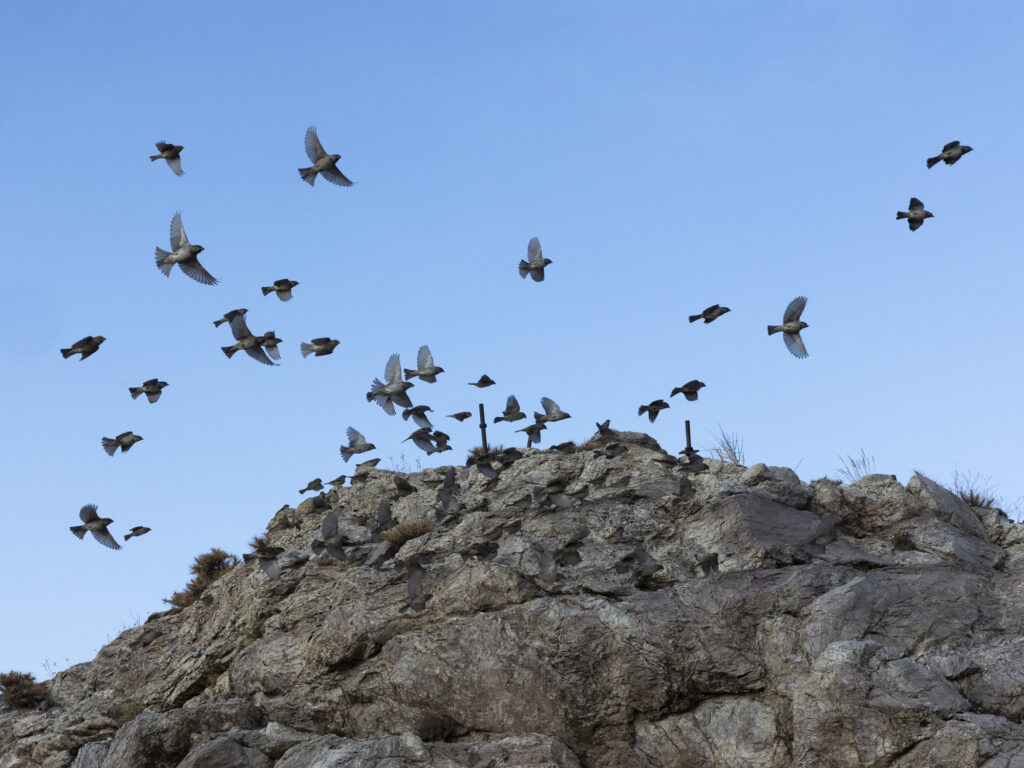
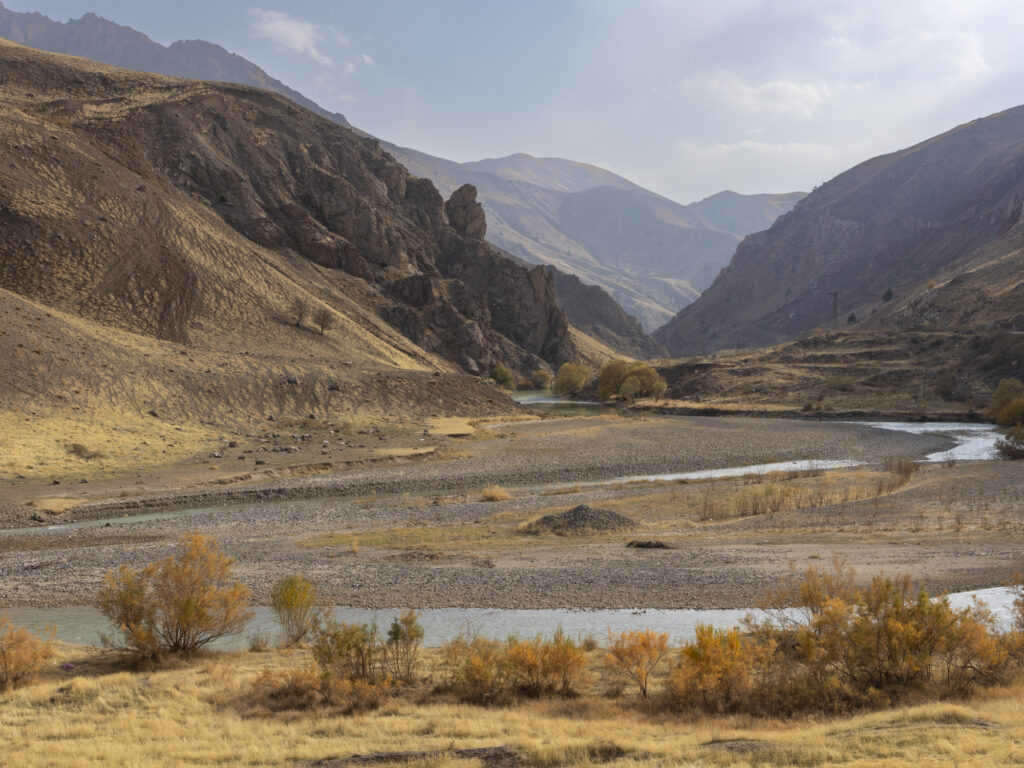
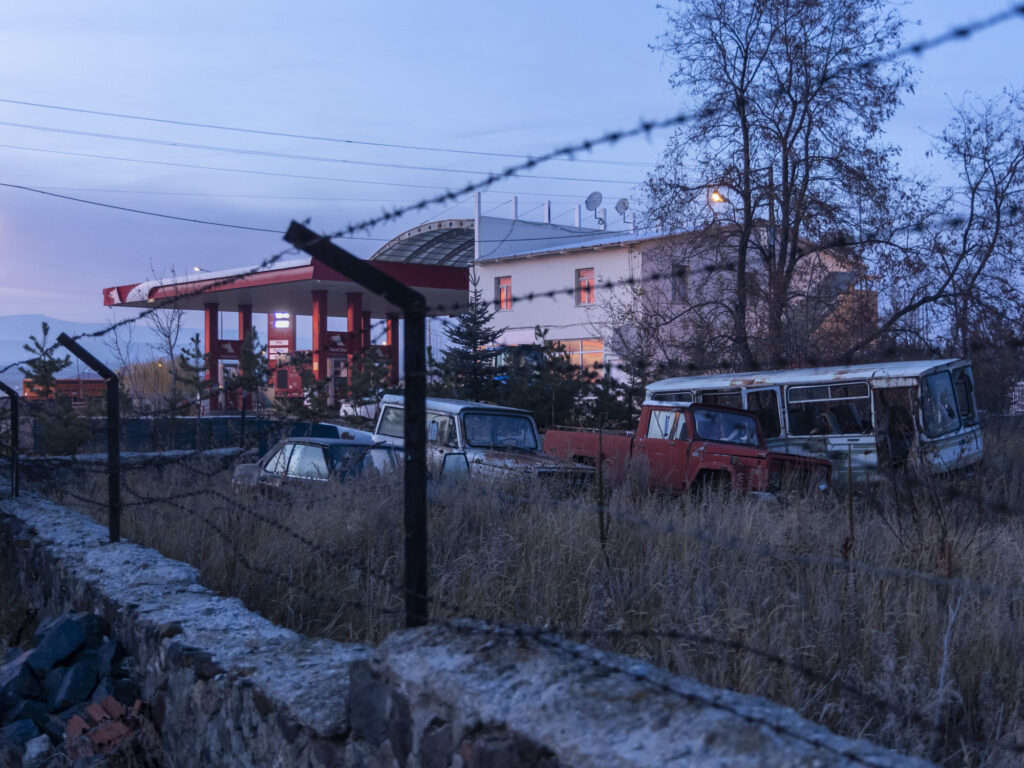
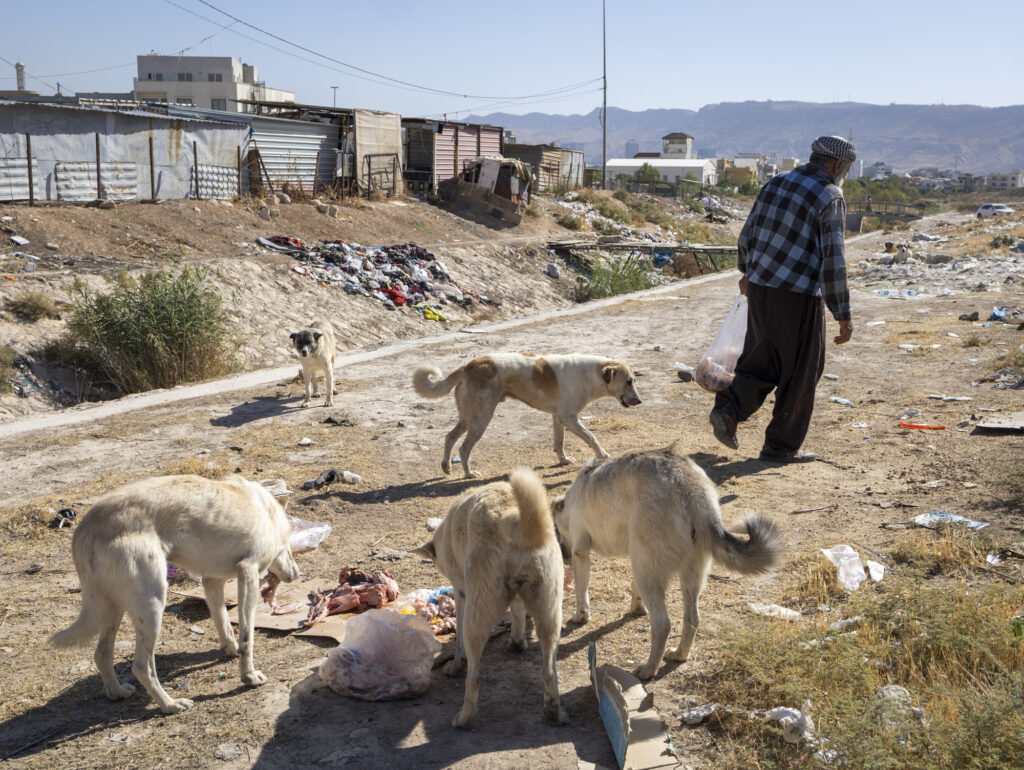
The Images
1 – Doğubeyazıt, Turkey
2 – Ishak Pasha Palace, Turkey
3 – Kars Region, Turkey
4 – Ani, Turkey
5 – Ishak Pasha Palace, Turkey
6 – Agrı Region, Turkey
7 – Hakkari Region, Turkey
8 – Arpaçay, Turkey
9 – Lalish, KRG
10 – Duhok, Iraq (Kurdistan)
11 – Agrı Region, Turkey
12 – Aragats Volcano, Armenia (Seen from Turkey)